- 25
- July
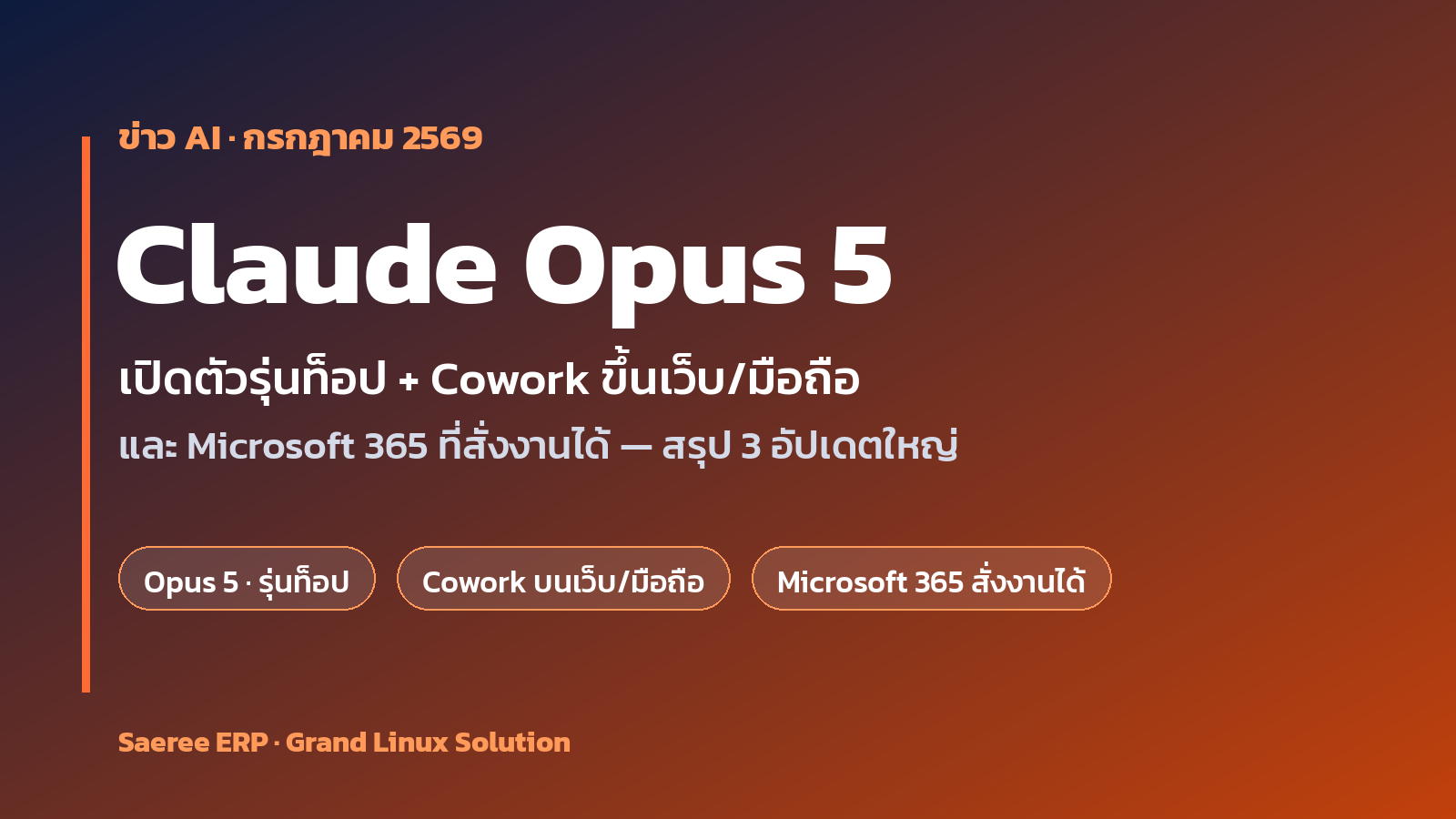
Claude Opus 5 is Anthropic's most advanced frontier model, and it is now generally available (GA) as of July 2026 — arriving alongside two other big updates in the same announcement: Claude Cowork comes to web and mobile starting 3 August 2026, and the Microsoft 365 connector can now "take action" (write), not just read your data. This article summarizes all three clearly, plus what organizations using Claude and their admins must prepare before the new capabilities switch on.
In one line: Claude Opus 5 is Anthropic's top model — stronger at coding, agents and knowledge work, and it matches Claude Fable 5 in many domains at half the price · Cowork now runs in Anthropic's cloud, so it works on web and mobile from 3 Aug 2026 · Microsoft 365 can send mail, manage calendars and edit SharePoint files, but admins must enable it first.
In this article
- Claude Opus 5 — what's new, and what changes by seat
- Effort levels — thinking power vs cost control
- Action-taking in Microsoft 365 + admin steps
- Cowork on web and mobile, from 3 August
- Timeline + checklist for your organization
- From the perspective of a Thai ERP organization
- Conclusion — what to do next
The facts here come from Anthropic's official announcement to team (Claude Team) users in July 2026, which bundled three updates into one release. We summarize only what was actually announced — no benchmark numbers that haven't been disclosed.
1. Claude Opus 5 — what's new, and what changes by seat
Claude Opus 5 is Anthropic's most advanced Opus model, now generally available. Anthropic highlights gains in the three areas most teams rely on — coding, long-running agentic work that runs reliably for hours, and complex professional work such as financial modeling and legal analysis, with sharper reasoning across long documents.
On value: Anthropic says Opus 5 matches Claude Fable 5 in many domains at half Fable 5's price — a meaningful step up in capability-per-cost from the previous generation, Claude Opus 4.8, which we reviewed earlier.
In short: Opus 5 = the top model, stronger at code + long agent runs + complex analysis, and better value than before — and users don't have to do anything to get it. It's available at launch.
What changes by seat type
The clearest difference is how Opus 5 becomes the default, depending on seat type:
| Seat type | How Opus 5 behaves |
|---|---|
| Premium seat | Opus 5 is the default model in Claude chat, Cowork and Claude Code, running at high effort by default. Users can change the effort level anytime to match the task. |
| Standard seat | Opus 5 is available in the model dropdown across chat, Cowork and Claude Code — ready to select whenever it fits the work. |
For admins: Opus 5 is available to your team at launch. If you manage costs with usage credits, Anthropic suggests reviewing effort settings to balance capability and cost (see the next section).
Using Claude at work? Get a quote in Thai Baht with a full tax invoice
A short form — you get a request number by email right away, and our sales team follows up using that number · one form for Team and Enterprise
2. Effort levels — thinking power vs cost control
Opus 5 keeps the "effort dial" that became prominent in the 4.x line — you choose how hard the model "thinks." Higher settings give it more room to reason on hard tasks, but use more resources.
| Effort level | Best for |
|---|---|
| Extra / Max | Gives Opus 5 the most room to think on your hardest tasks — long-document analysis, complex agent runs. |
| Lower settings | Keep costs down if you use usage credits — Anthropic states these still perform at or above other models at the same price, so you can match the setting to the job. |
For budget-conscious teams: If you pay via usage credits, set a policy for which task types use which effort level — routine work doesn't need Max every time. Right-sizing effort is the key to controlling spend without losing quality.
3. Action-taking in Microsoft 365 + what admins must do
Previously Claude's Microsoft 365 connector could only "read" data in your tenant. This update lets Claude take action (write/act) inside your tenant. Read and search are unchanged.
| App | What Claude can now do |
|---|---|
| Outlook | Send email; manage drafts, labels, filters and auto-reply · create, update or delete calendar events |
| SharePoint | Create and update files |
| Read / search | Unchanged — works as before |
This kind of "take action" ability is powerful for AI agent work — but the permissions must be set correctly or write requests will fail. There are two admin steps:
Step 1 — Enable write tools individually (tenants installed before 7 June only):
For tenants that installed the connector before 7 June, write actions are off by default. Enable each write tool you want in the connector's tool permissions, setting each one to "Allow" or "Ask." Important: the connector-wide "all tools" permission alone isn't enough — the individual write-tool settings take precedence until you change them one by one. Tenants that installed after 7 June have write tools on by default and can skip this step.
Step 2 — Approve the new scopes (every tenant, regardless of install date): A Microsoft Entra Global Administrator must make a one-time approval of the updated set of scopes. Without it, write requests fail even after step 1. For more on permissions and data governance, see Claude security and data governance.
4. Cowork on web and mobile — starting 3 August 2026
Until now, Claude Cowork ran only on a user's laptop, because sessions ran on the device. Starting 3 August 2026, Cowork works on web and mobile because sessions can run in Anthropic's cloud instead of only on one laptop.
Give Claude a task and it works across your files, calendar, email, messaging apps, the web and other connected tools until the job is done. Your team can keep working in the same session across devices, and scheduled tasks run in the background even with no device online.
| Item | Detail |
|---|---|
| Start date | 3 August 2026 — turns on for your team by default |
| Where to use it | From the home screen at claude.ai, or the Cowork sidebar in the Claude app on iOS/Android |
| Chat ↔ Cowork | Toggle quickly in the main window · Projects and artifacts live across both |
| Cloud on/off | Use the cloud icon in the top-right corner · when off, work stays on the device |
| Desktop app | Full experience — Claude can also access local files and your browser |
On security: Anthropic updated its security architecture documentation for Cowork on web and mobile, and OpenTelemetry coverage now includes Cowork on web and mobile. For admins: no action needed — it turns on for your team on 3 Aug, and you can manage it any time from Organization settings → Cowork.
5. Timeline + checklist for your organization
Who needs to do what, and when:
| Update | When | Admin action |
|---|---|---|
| Opus 5 | Available now | Optional — review effort if you use usage credits |
| Microsoft 365 write | Available now | Enable write tools individually (if installed before 7 June) + Entra Global Admin approves scopes |
| Cowork web/mobile | 3 Aug 2026 | None — on by default; manage in Organization settings → Cowork |
6. From the perspective of a Thai ERP organization
For organizations that run an ERP such as Saeree ERP as their core business system, this release reinforces a boundary we always stress — the ERP is the source of truth, and Claude is an assistant that takes that data and acts on it. Now that Claude can take action in Microsoft 365 and Cowork can run in the cloud, the AI assistant handles documents, email and calendars more fluidly — but the numbers that must be accurate for accounting, inventory and finance still come from the ERP, where permissions and audit trails are controlled.
What organizations should focus on from this update:
- Permissions and governance — once AI can "take action" in external systems, deciding what Claude is allowed to do matters more than ever, just like least-privilege in an ERP.
- Data boundaries — work that needs numerical accuracy and document linkage should stay owned by the ERP, with Claude helping to summarize, draft and communicate. See our guidance on using AI in accounting.
- Humans still verify — output from long agent runs should be reviewed before it drives real decisions, especially in finance and legal.
Saeree ERP positions its AI Assistant along the same lines (currently in development): AI as an assistant working on the system's real data, not a replacement for the ERP's controls.
7. Conclusion — what to do next
All three updates point in the same direction: making AI able to "get real work done" — a better-value model (Opus 5), acting inside your business apps (Microsoft 365), and continuous cloud work across devices (Cowork). What organizations should do: review effort settings if you manage usage credits, complete both Microsoft 365 admin steps before expecting write to work, and set clear permission policy before switching Cowork's cloud on for the whole team.
Once AI can act on real systems, the key question is no longer "can it do this?" but "what do we permit it to do, and who reviews it?" — governance matters as much as capability.
- The Saeree ERP Team
References
- Anthropic — official announcement to team (Claude Team) users on Claude Opus 5, Microsoft 365 and Claude Cowork, July 2026
- Anthropic News — product news and announcements (accessed 25 Jul 2026)
- Anthropic Documentation — connector setup and governance guides
Want to use Claude in your organization the right way?
Grand Linux Solution supplies Claude team licenses with proper Thai tax invoicing, and advises on permission and governance setup that fits Thai organizations.
Get advice / request a quoteTel 02-347-7730 | sale@grandlinux.com