- 9
- May
What is n8n?
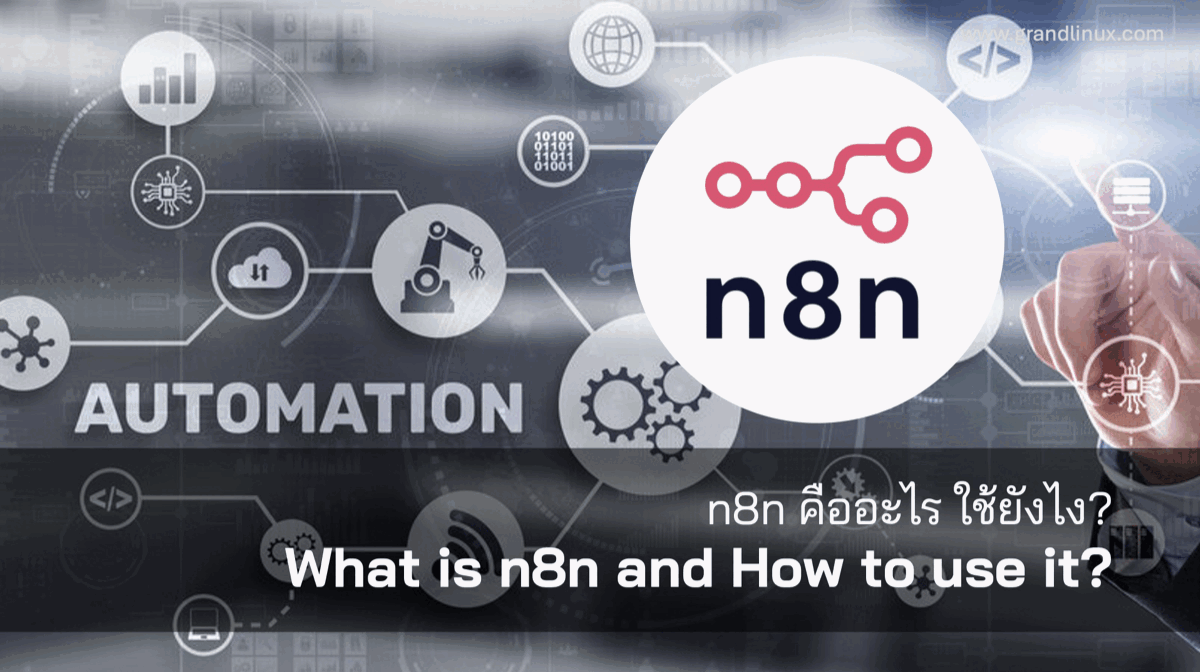
n8n (pronounced "n-eight-n", short for "nodemation") is an open-source workflow automation tool that lets you connect applications and systems together — pulling data from one system into another, conditional on rules you define — using a visual node-based editor instead of writing code from scratch.
What sets n8n apart from competitors is that it is self-hostable on your own server. All data flows only through servers you control, never sent out to the vendor's cloud — ideal for organizations handling sensitive data such as customer records, financial data, or government information.
n8n vs Zapier vs Make
| Topic | n8n | Zapier | Make (formerly Integromat) |
|---|---|---|---|
| License | Source-available (Sustainable Use) | SaaS only | SaaS only |
| Self-host | ✓ Free (Docker / npm) | ✗ No | ✗ No |
| Cloud Pricing | Separate Cloud plan available | Per-task — gets expensive at high volume | Per-operation |
| Code Node | JavaScript + Python | JavaScript / Python (limited by plan) | JavaScript |
| Data Privacy | Stays on your server | Through Zapier cloud (US) | Through Make cloud (EU) |
| Best for | Organizations with IT team to run servers | SMEs / marketers wanting fast setup | Power users needing complex logic |
n8n Architecture — Nodes, Triggers, Workflows
n8n uses a node-based approach, like connecting LEGO blocks. Each block does one job and you wire them together into a flow:
- Trigger Node: the starting point — Webhook (URL is hit), Schedule (every 5 minutes / nightly), Manual (run on demand), Polling (check periodically)
- Action Node: what the workflow does — create a database record, send email, post to Slack/LINE, call HTTP API, transform data formats
- Logic Node: decision-making — IF (condition), Switch (multiple cases), Merge (combine branches), Loop (repeat), Wait (delay)
- Code Node: write JavaScript or Python for custom logic that built-in nodes cannot handle
n8n supports integrations with 400+ apps and services — Google Workspace, Microsoft 365, Slack, LINE, Telegram, databases (PostgreSQL, MySQL, MongoDB), cloud storage, AI APIs (OpenAI, Anthropic), and any HTTP/Webhook system. Anything not pre-integrated can be called via the HTTP Request node.
What Can n8n Do — Real-World Use Cases
Common scenarios in Thai organizations:
| Category | Example Workflow |
|---|---|
| Cross-system sync | Pull sales orders from e-commerce → create invoice in ERP → email customer |
| Team alerts | When stock falls below min level → send LINE Notify to warehouse manager |
| Automated reports | Every morning at 8am → query yesterday's sales → email PDF summary to MD |
| AI integration | Receive quotation email → send to AI for summary → save as draft quotation in ERP |
| Approval process | New PO > 100,000 THB → send approval link via LINE to executive → update status in ERP |
| One-time migration | Move customer data from legacy system → clean → import into new ERP |
How to Install n8n
n8n can be installed several ways. Docker is recommended for being easy to set up and upgrade:
1. Docker (recommended)
For production or server experimentation. Use a volume to persist workflows and credentials across restarts.
- Requires Docker / Docker Compose
- Use the official
n8nio/n8nimage - Always put a reverse proxy (Nginx / Traefik) with HTTPS in front for any real use
- Enable Basic Auth or User Management to restrict access
2. npm (for experimentation)
Good for trying things on your own machine. Not recommended for production — process management and restarts are harder.
- Requires Node.js 20+
npx n8nlaunches it immediately
3. n8n Cloud
The n8n team manages the server for you — no installation needed. Suits small teams that don't want to maintain infrastructure, but you have to send data through their cloud.
N8N_ENCRYPTION_KEY and back up both workflows and the encryption key safely. If the key is lost, all credentials become unreadable.
n8n's License — Is It Really Free?
n8n is not pure MIT/Apache open-source — it uses its own Sustainable Use License (SUL). In short:
- Internal company / personal projects are free — unlimited workflows, executions, users
- You cannot resell n8n as a competing SaaS or rebrand it as your own product
- Some features like SSO, LDAP, external storage, and audit logs require an Enterprise license
For typical organizations using it internally, you can use it for free without worrying about additional licensing.
How n8n Connects with ERP
n8n acts as an integration layer sitting between ERP and other systems. Instead of having developers write custom code for every system pair, you can drag and drop in n8n — saving time and increasing visibility (entire flow visible on one screen).
Common integration patterns:
- ERP exposes API → n8n calls it: e.g. Saeree ERP exposes a REST API for stock queries — n8n calls hourly and pushes summaries to a dashboard
- ERP fires Webhook → n8n receives: e.g. when a PO is approved → ERP fires a webhook → n8n creates a task in your project management tool
- n8n reads database directly: if ERP doesn't expose an API, n8n's PostgreSQL node can read directly (use a read replica to avoid impacting production)
- File-based integration: for legacy systems without APIs (e.g. GFMIS) — n8n reads CSV/text files and transforms format before importing into ERP
Read more on system integration in ERP Integration — API and What You Need to Know and about PostgreSQL — the database Saeree ERP uses.
Pros and Cons of n8n
Pros
- Self-hostable — data stays inside your organization
- Drag-and-drop UI makes flows clear; non-developers can read them
- Code node available for custom logic when needed
- Many integrations + HTTP Request node covers anything missing
- Free for internal use
- Active community + workflow templates in the official marketplace
Cons
- Requires an IT team for server, backups, upgrades
- Complex workflows become hard to read and debug (like untested code)
- Enterprise features (SSO, audit log) cost extra
- Not ideal for high-volume / low-latency real-time work — that should be a dedicated service
- SUL license is not OSI open-source — if your core business is selling automation platforms, you can't use n8n
Getting Started — 5-Step Checklist
| # | Step |
|---|---|
| 1 | Pick a first use case with a clear pain point — e.g. "the morning copy-paste from Sheet into ERP". Don't start with a big workflow. |
| 2 | Install n8n on a test server (Docker) + enable HTTPS + set user/password |
| 3 | Build your first workflow — test each node before chaining the full flow |
| 4 | Add error handling — failures must alert the team and retry, never silently disappear |
| 5 | Back up workflows + N8N_ENCRYPTION_KEY weekly + document what each workflow does |
n8n vs Custom Code — Which to Choose?
Not every integration is a fit for n8n. Sometimes writing a dedicated service is better:
| Scenario | Pick |
|---|---|
| Simple data sync / daily schedule | n8n — fast, easy to maintain |
| Business team wants to view and edit it themselves | n8n — easy-to-read UI |
| Very complex logic that needs unit tests | Custom code — version control + tests |
| High-volume real-time (thousands per second) | Custom code — better performance |
| Distributed / multi-region deployment | Custom code + message queue |
| Existing ERP that frequently needs to connect to new systems | n8n — add new workflows without redeployment |
"Workflow automation doesn't replace people. It replaces copy-paste and re-keying. People are left with the thinking work."