- 19
- February
When it comes to ERP systems, what lies behind all the stability and performance is the database — the heart that stores every financial transaction, inventory record, production entry, and resource across the entire organization. Saeree ERP has used PostgreSQL since the very beginning of development, spanning over 20 years — this article explains why.
What is PostgreSQL?
PostgreSQL (pronounced "post-gres-Q-L" or simply "Postgres") is an open-source relational database management system that has been in development since 1986 at UC Berkeley, USA. With over 38 years of continuous development, it is maintained by a global community of developers.
PostgreSQL is not just an ordinary database — it is "The World's Most Advanced Open Source Relational Database", trusted by leading global organizations such as Apple, Instagram, Spotify, Netflix, NASA, and government agencies worldwide.
Why Did Saeree ERP Choose PostgreSQL from the Start?
Over 20 years ago, the Saeree ERP development team had to choose a database to serve as the "foundation" for the entire system. The criteria used for that decision:
| Criteria | Reason for Choosing PostgreSQL |
|---|---|
| Reliability | PostgreSQL is renowned for data integrity — the most critical requirement for accounting and financial systems |
| SQL Standards | Strict SQL standard compliance ensures high code quality and easy maintenance |
| Open Source | No licensing fees, reducing costs for clients with no vendor lock-in |
| Enterprise-Grade Capabilities | Supports transactions, ACID compliance, and concurrency control on par with expensive commercial databases |
| Strong Community | A large developer community with regular updates and rapid security vulnerability patches |
Key Strengths of PostgreSQL for ERP Systems
1. ACID Compliance — Financial Data Must Be 100% Accurate
ERP systems handle financial data where "errors are unacceptable" — whether recording journal entries, processing payments, or adjusting inventory. Every transaction must adhere to ACID principles:
- Atomicity — Every transaction must either "succeed completely or not at all" with no intermediate states
- Consistency — Data must always comply with business rules, such as debits equaling credits
- Isolation — Multiple users can work simultaneously without interfering with each other
- Durability — Once saved, data will not be lost even if the system crashes
PostgreSQL uses MVCC (Multi-Version Concurrency Control), allowing hundreds of users to read and write data simultaneously without locking entire tables — which is critical for ERP systems with many concurrent users.
2. High Performance — Handling Millions of Records
ERP systems for medium-to-large organizations contain millions of records: purchase orders, invoices, inventory entries, accounting records, and employee histories — all of which must be searchable and reportable quickly.
PostgreSQL offers a comprehensive set of performance tools:
| Feature | Benefit for ERP |
|---|---|
| Advanced Indexing | Supports B-Tree, Hash, GiST, GIN, BRIN — fast data retrieval tailored to each use case |
| Table Partitioning | Splits large tables into segments, such as by fiscal year, for faster queries |
| Parallel Query | Uses multiple CPU cores to process a single query simultaneously — reports that took minutes now complete in seconds |
| Query Optimizer | Automatically plans the fastest data retrieval path, even for complex queries |
| Connection Pooling | Supports many concurrent users while efficiently managing resources |
3. Enterprise-Level Security
Data in an ERP system is business-confidential — financial data, employee salaries, product costs, and customer information must all be protected.
- Row-Level Security (RLS) — Set permissions at the row level, e.g., sales teams see only their own customers
- SSL/TLS Encryption — Encrypts data in transit across the network
- Data-at-Rest Encryption — Encrypts data stored on disk
- Role-Based Access Control — Assigns user permissions by role, aligned with organizational structure
- Audit Logging — Records every change for complete traceability


4. High Flexibility — Supporting Diverse Data Types
An ERP system does not just manage numbers — it also handles documents, images, JSON data from external APIs, and much more. PostgreSQL supports a diverse range of data types:
- JSON/JSONB — Stores semi-structured data natively, ideal for API integrations
- Array & Composite Types — Stores nested data without creating additional tables
- Full-Text Search — Searches text within documents, purchase orders, and notes
- UUID — Generates distributed primary keys, ideal for multi-branch systems
- Date/Time with Timezone — Handles timezones automatically, essential for organizations working across time zones
5. Data Backup and Recovery
For mission-critical ERP systems — data loss is unacceptable and the system must always be available:
- Point-in-Time Recovery (PITR) — Recover data to any point in time, even one second before an incident
- Streaming Replication — Automatic real-time backup to standby servers
- Logical Replication — Selectively replicate specific tables, ideal for reporting servers
- pg_dump / pg_basebackup — Reliable backup tools for both logical and physical backups
PostgreSQL Compared to Other Databases
Compared with other popular databases commonly used with ERP systems:
| Feature | PostgreSQL | MySQL | Oracle / SQL Server |
|---|---|---|---|
| Licensing Cost | Free (Open Source) | Free (Open Source) | Very expensive (hundreds of thousands to millions of baht/year) |
| ACID Compliance | Fully compliant | InnoDB Engine only | Fully compliant |
| MVCC | Fully supported | Partially supported | Fully supported |
| JSON Support | JSONB (Binary, fast, indexable) | JSON (Text-based) | Supported but less flexible |
| Extensibility | Create custom data types, functions, and indexes | Limited | Possible but complex |
| Row-Level Security | Built-in support | Not supported | Supports |
| Vendor Lock-in | None — migrate freely | Owned by Oracle Corp. | Vendor lock-in |
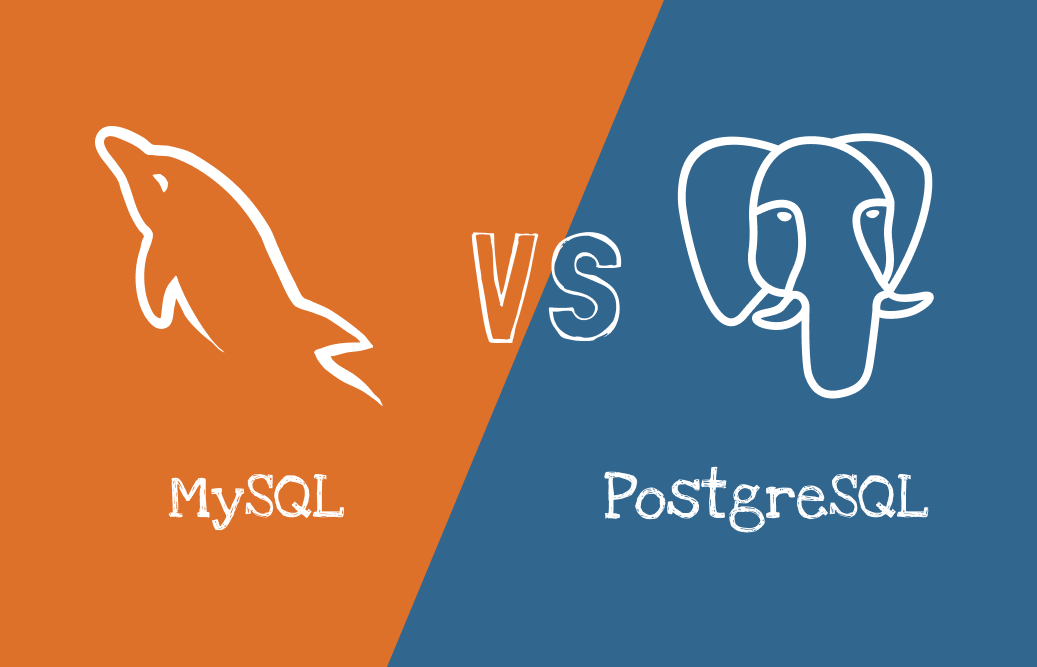
Why Not MySQL?
MySQL is a good open-source database, but it was designed primarily for web applications (fast reads, easy configuration). PostgreSQL, on the other hand, was designed with data integrity as its top priority — which is exactly what accounting and ERP systems need most. Furthermore, MySQL lacks several critical features such as Row-Level Security, JSONB, Advanced Indexing, and Window Functions that Saeree ERP uses for complex reporting.
20+ Years with PostgreSQL — Proven in Practice
Throughout over 25 years of using PostgreSQL, Saeree ERP has proven:
- Never lost a single customer record — thanks to strict ACID compliance and the WAL (Write-Ahead Logging) system
- Supports organizations of all sizes — from SMEs to government agencies with hundreds of concurrent users
- Seamless upgrades — from PostgreSQL 7.x in the early days to the latest version today, without rewriting the system
- Zero licensing fees — customers pay nothing for database licenses, saving hundreds of thousands to millions of baht annually compared to Oracle or SQL Server
- Growing community every year — from a lesser-known database to the most popular open-source database in 2024-2025 according to Stack Overflow and DB-Engines rankings
Real-World Usage Examples in Saeree ERP
| Saeree ERP Module | PostgreSQL Feature Used |
|---|---|
| Accounting (GL, AP, AR) | ACID Transaction — every debit/credit entry must always balance |
| Inventory & Warehouse | MVCC — multiple warehouses can process transactions simultaneously without waiting for locks |
| Executive Reports | Window Functions, CTE — generate complex reports in a single query |
| Approval Workflow | JSONB — stores flexible workflow configurations |
| Audit Trail | Trigger + Table Partitioning — records every change, partitioned by year |
| Document Search | Full-Text Search — quickly search document numbers, customer names, and notes |
Choosing a database for an ERP system is like laying the foundation of a building — changing it later is virtually impossible. What has given us confidence in choosing PostgreSQL for over 20 years is that it has never let us or our customers down.
— Saeree ERP Team
Conclusion — Why PostgreSQL Is the Best Choice for ERP
- Data Integrity — Accounting and financial systems come first, and PostgreSQL excels at this
- High Performance — Handles millions of records with hundreds of concurrent users
- Security — Comprehensive enterprise-grade security from row-level to full encryption
- Open Source & No Vendor Lock-in — Zero licensing fees with no vendor dependency
- Continuously growing community — Confidence that development will continue for decades to come
- Proven over 20 years — Saeree ERP uses it in production with both government and private sector clients
If you are looking for an ERP system built on a trusted enterprise-grade database, you can schedule a demo or contact our advisory team to learn more about Saeree ERP on PostgreSQL.