- 24
- March
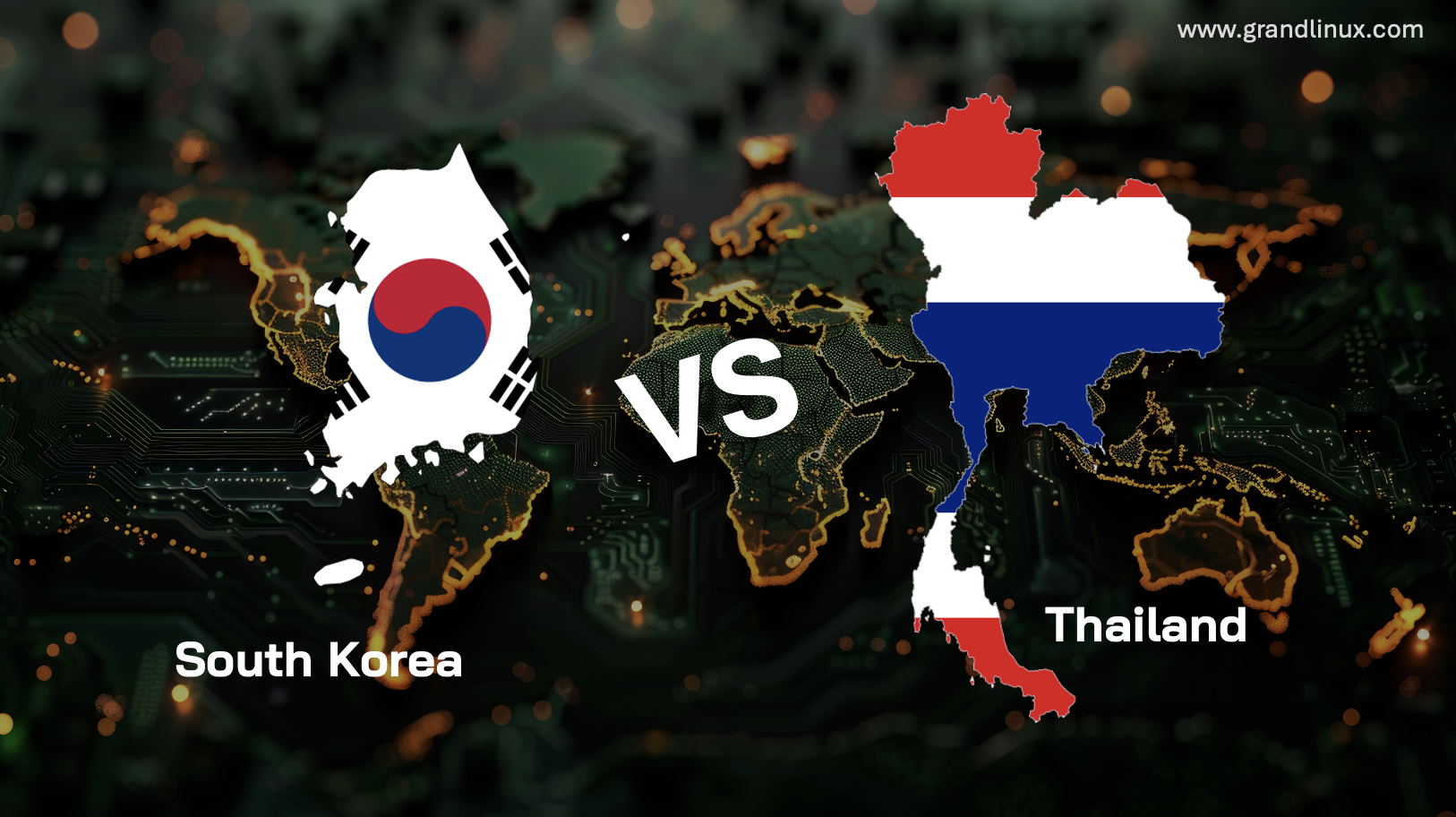
In 1965, Thailand had a GDP per capita of $140 while South Korea had only $105-130 — Thailand was richer than Korea. Both countries were poor, with most of the population engaged in agriculture, both under military governments, and both receiving aid from the United States. But today, Korea's GDP per capita is $33,000 while Thailand's is $7,200 — a gap of 4.5x. Samsung alone generates revenue exceeding 40% of Thailand's entire GDP — what happened over the past 60 years?
Key Numbers to Know
- GDP per capita: Korea $33,000 vs Thailand $7,200 — a 4.5x gap (they started equal)
- R&D: Korea 5% of GDP (~$100 billion) vs Thailand 1.14% (~$6 billion)
- Patents: Korea 68,000/year vs Thailand 600 — a 113x difference
- PISA Math: Korea 527 (Top 5 globally) vs Thailand 394
- Samsung's annual R&D alone: $25 billion — 4x Thailand's entire national R&D budget
Starting from the Same Place — GDP per Capita Since 1960
| Year | Thailand | South Korea | Ratio |
|---|---|---|---|
| 1960 | $100-110 | $155 | Nearly equal |
| 1965 | $140 | $105-130 | Thailand was richer! |
| 1975 | $350 | $610 | Korea 1.7x |
| 1980 | $690 | $1,750 | Korea 2.5x |
| 1990 | $1,500 | $6,500 | Korea 4.3x |
| 2000 | $2,000 | $12,000 | Korea 6x |
| 2010 | $5,100 | $22,100 | Korea 4.3x |
| 2024 | $7,200 | $33,000 | Korea 4.5x |
"The period that changed everything was 1973-1990 — when Korea poured investment into heavy and chemical industries (the HCI Drive) while Thailand chose to be a manufacturing base for foreign companies. That turning point determined the fate of both countries to this day."
What Did Korea Do Differently? — 4 Eras of Transformation
Era 1: Export or Die (1961-1972)
Park Chung-hee seized power in 1961 and redirected the entire national economy — the government set export targets, rewarded companies that met them, and penalized those that didn't. Low-interest loans were provided exclusively to exporting companies. It started with textiles, wigs, and plywood before advancing to heavy industry.
Era 2: Heavy Industry — The Turning Point (1973-1990)
1973 — The Heavy & Chemical Industry Drive That Changed Everything
- POSCO (1968): Founded as the national steel company, it became the world's 4th-5th largest steel producer within 15 years
- Hyundai: Started in construction, the government pushed it into shipbuilding (1972), then automobiles (1975) — now the world's 3rd largest automaker
- Samsung: Started in trading/sugar, moved to electronics (1969), then semiconductors (1983) — now the world's #1 chip company
- KAIST (1971): A leading research university modeled after MIT — drawing Korean scientists back from the US
What Thailand did differently: Thailand chose to welcome FDI — letting Toyota, Honda set up assembly plants, letting Seagate, Western Digital manufacture HDDs. Thailand gained wages and taxes, but the technology, brands, and highest value-added remained with foreign companies.
Era 3: The 1997 Crisis — Different Recoveries
| South Korea | Thailand | |
|---|---|---|
| Impact | Won collapsed, Samsung nearly bankrupt, Daewoo shut down, IMF bailout of $57 billion | Baht collapsed on July 2, 1997 (the crisis trigger), GDP contracted ~10% |
| Reforms | Aggressive reforms: Shut down Daewoo, forced chaebol restructuring, invested in nationwide broadband | Slower reforms, political instability |
| IMF Repayment | 2001 (3 years ahead of schedule) | Full recovery by ~2006-2007 |
Era 4: Global Technology Leader (2000-Present)
- 2005: Korea achieved the world's highest broadband penetration — investing in nationwide digital infrastructure
- 2012: Samsung became the world's #1 smartphone manufacturer
- 2019: Korea launched commercial 5G as the first country in the world
- Hallyu (Korean Wave): BTS, BLACKPINK, Squid Game, Parasite — generating ~$12.5 billion/year + enormous soft power
The Chaebol Model vs. The FDI Model — The Difference That Determined Everything
| Factor | South Korea (Chaebol) | Thailand (FDI) |
|---|---|---|
| Technology Owner | Korean companies (Samsung, Hyundai, LG) | Foreign companies (Toyota, Seagate) |
| Value-Added Stays In | The country — designs + manufactures + sells | Foreign countries — only assembly fees remain |
| R&D | Conducted domestically (Samsung R&D $25B/year) | R&D stays at foreign HQs |
| Brands | Korean brands (Samsung Galaxy, Hyundai, Kia) | No world-class Thai tech brands |
| Fortune Global 500 | 16 companies | 1 company (PTT — energy, not tech) |
The Numbers That Tell Everything
Thailand vs South Korea — Innovation Indicators
| Indicator | Thailand | South Korea | Difference |
|---|---|---|---|
| R&D (% of GDP) | 1.14% | 5% | 4.4x |
| R&D (Value) | $6 billion | $100 billion | 17x |
| PCT Patents/Year | ~600 | ~68,000 | 113x |
| Researchers per Million | 1,800 | 8,800 | 5x |
| GII Rank | 44 | 6 | 38 ranks |
| PISA Math | 394 | 527 | 133 points |
| University Enrollment | ~45-50% | ~98% | 2x |
| Broadband | ~60% | ~99% | 1.6x |
The Middle Income Trap — The Trap Thailand Has Yet to Escape
Thailand is often cited as a textbook example of the "Middle Income Trap" — a country that successfully transitioned from poor to middle-income (through FDI + manufacturing) but has been unable to advance to high-income status because it hasn't built its own technology.
South Korea is the example of a country that successfully escaped the trap — through massive R&D investment, building national champions, reforming education, and daring to build its own technology even when starting from zero.
Thailand's GDP per capita has been stuck in the $5,000-7,500 range for the past 15 years (2010-2024), while Korea continued to rise from $22,000 to $33,000 over the same period.
Lessons for Thai Organizations
- Build your own technology, don't just buy it — Samsung started by reverse-engineering DRAM, then developed until it surpassed its teachers. Thai organizations must dare to invest in R&D, not just purchase off-the-shelf foreign software.
- An ERP system is the starting point for Digital Transformation — Before you can innovate, you need good data first. Proper ERP implementation helps reveal true costs, control budgets, and make data-driven decisions.
- Use Thai software when possible — Money paid for SAP/Oracle flows out of the country. Thai software like Saeree ERP understands Thai regulations, supports Thai chart of accounts, and keeps money circulating in the Thai economy.
- Invest in people — Korea invested in education until 98% attend university and PISA ranks in the Top 5 globally. Thailand must urgently upskill its workforce in cybersecurity, database management, and AI.
"South Korea proved that a small country with few resources can become a technology superpower — with a clear strategy, serious investment in people and R&D, and the courage to build its own brands. Thailand has more resources and 5x the land area. If it could achieve even half of what Korea did, the results would be transformative."