- 24
- March
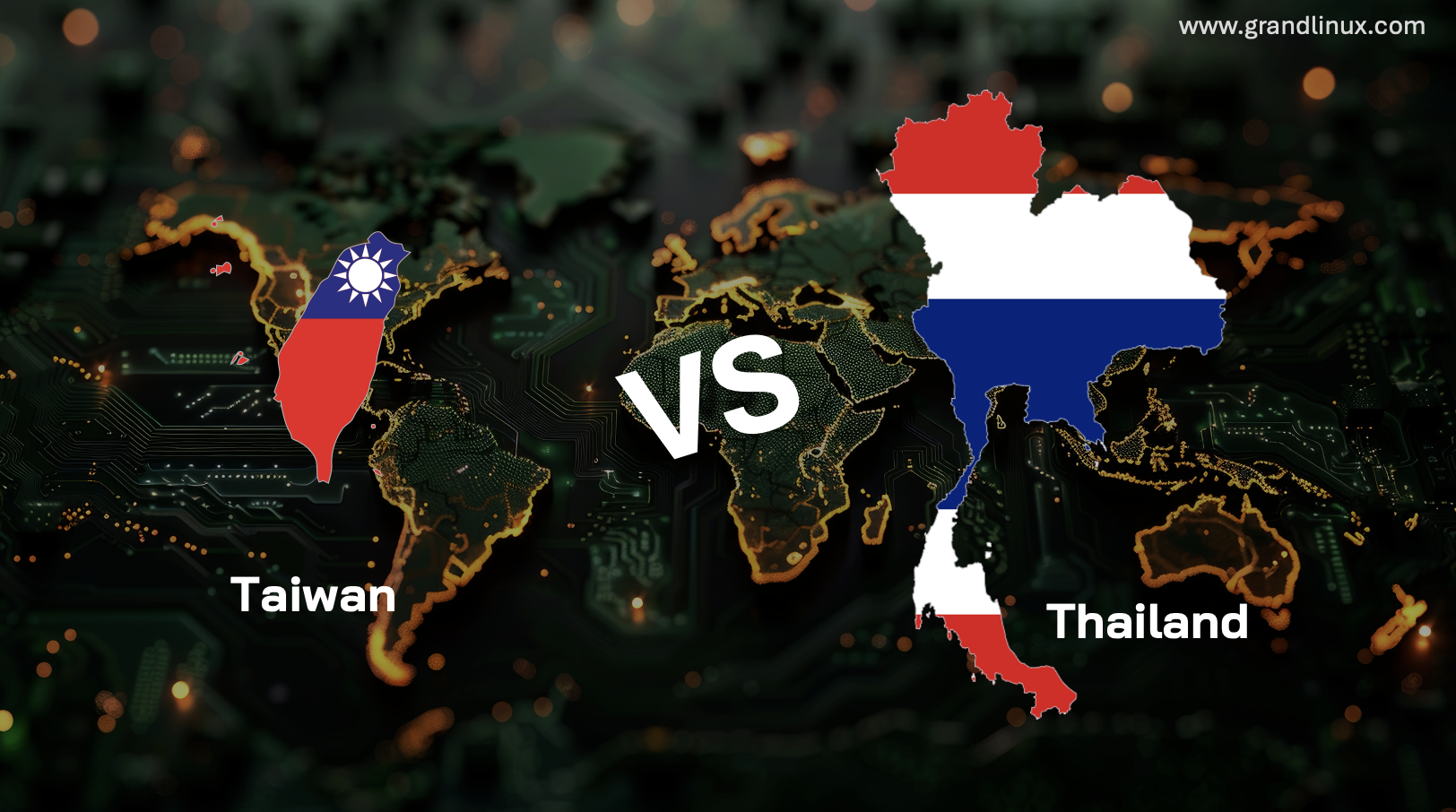
Taiwan has a land area of just 36,197 km² — 14 times smaller than Thailand. Its population of 23.4 million is 3 times fewer. Yet TSMC alone has a market capitalization of $800-900 billion, which is greater than Thailand's entire GDP ($515 billion). And Taiwan's GDP per capita is 4.6 times higher than Thailand's ($33,800 vs $7,400) — the question is, how did this tiny island achieve this?
Key Takeaways
- GDP per capita: Taiwan $33,800 vs Thailand $7,400 — a 4.6x gap
- TSMC: Revenue $90B/year, market cap $800-900B, produces 90%+ of the world's advanced chips (<7nm)
- R&D: Taiwan 3.8% of GDP ($30B) vs Thailand 1.3% ($7B) — a 4x gap
- Patents: Taiwan 2,200 per million people vs Thailand 28 — an 80x gap
- PISA Mathematics: Taiwan 547 (#3 worldwide) vs Thailand 394 — a 153-point gap
Comparing the Fundamentals — A Small Island That's Not So Small
| Indicator | Thailand | Taiwan |
|---|---|---|
| Land Area | 513,120 km² | 36,197 km² |
| Population | ~72 million | ~23.4 million |
| GDP Nominal | ~$515B | ~$790B |
| GDP per Capita | $7,400 | $33,800 |
| GDP Growth (2024) | 2.8% | 4.0% |
| R&D as % of GDP | 1.3% | 3.8% |
| R&D Spending (per year) | ~$7B | ~$30B |
| Patents per Million People | 28 | 2,200 |
| GII Rank (2024) | #44 | #5 |
| PISA Mathematics (2022) | 394 | 547 (#3 worldwide) |
Thailand has 14 times more land area and 3 times more people, yet Taiwan's total GDP is actually higher — meaning Taiwan's productivity per capita is nearly 5 times greater than Thailand's. This gap is wider than most people realize.
The Critical Gaps — 5 Things That Made Taiwan a Technology Superpower
1. TSMC — The Company the World Can't Live Without
TSMC by the Numbers
- Revenue: $90 billion/year (2024)
- Market cap: $800-900 billion — greater than Thailand's entire GDP
- Global foundry share: 60% of the worldwide market
- Advanced chips (<7nm): Produces 90%+ of the world's supply — Apple, NVIDIA, AMD, Qualcomm all depend on TSMC
- R&D: Invests $30 billion/year — more than 4x Thailand's entire national R&D budget ($7B)
- Employees: 76,000+ people, over 50% engineers
TSMC was founded in 1987 by Morris Chang with the "pure-play foundry" concept — it doesn't design its own chips, but manufactures them for others. This model became the backbone of the global semiconductor industry, enabling companies like Apple and NVIDIA to design chips without building their own factories.
The "Silicon Shield" concept refers to Taiwan's critical importance to the global technology supply chain — so vital that no country would risk allowing Taiwan to be invaded. TSMC is the "shield" that protects Taiwan better than any weapon. This is similar to China's technology strategy, which has been trying to build SMIC as a competitor, but remains several generations behind TSMC.
2. A Complete Ecosystem — It's Not Just TSMC
| Company | Business | Revenue/Year | Notes |
|---|---|---|---|
| TSMC | Semiconductor Foundry | $90B | 60% global foundry, 90%+ advanced chips |
| Foxconn (Hon Hai) | Electronics Manufacturing | $200B | ~38% of Thailand's entire GDP |
| MediaTek | IC Design | $17B | #1 Android mobile chipmaker |
| ASUS | Computers/Mobile | $16B | ROG, ZenBook, Motherboards |
| Acer | Computers | $8B | World's #5 PC maker |
| Delta Electronics | Power/Automation | $14B | World's #1 power supply maker |
| Giant | Bicycles | $2B | World's largest bicycle brand |
Foxconn (Hon Hai) alone generates revenue of $200 billion/year — equivalent to ~38% of Thailand's entire GDP. Foxconn assembles iPhones, PlayStations, Nintendo Switches, and nearly every electronic device you use daily.
3. Hsinchu Science Park — Asia's Silicon Valley
Hsinchu Science Park (established 1980) is the heart of Taiwan's technology industry:
- 600+ companies in the park — from TSMC and MediaTek to startups
- Combined revenue of $50+ billion/year — from just 1,342 hectares
- 170,000 employees — most with master's or doctoral degrees in engineering
- Adjacent to National Tsing Hua University and National Chiao Tung University — an unending pipeline of engineers
- By comparison: Thailand's EEC (2018) started 38 years later and focuses more on manufacturing than R&D
4. R&D and Patents — The Biggest Gap
| Indicator | Thailand | Taiwan | Gap |
|---|---|---|---|
| R&D as % of GDP | 1.3% | 3.8% | 3x |
| R&D Spending | ~$7B | ~$30B | 4x |
| Patents per Million People | 28 | 2,200 | 80x |
| GII Rank | #44 | #5 | 39 positions |
| PISA Mathematics | 394 | 547 (#3) | 153 points |
| PISA Science | 409 | 537 | 128 points |
The most staggering figure is patents per million people: Taiwan 2,200 vs Thailand 28 — an 80x gap. Patents reflect genuine innovation capability, not just contract manufacturing. Continuous R&D investment is what keeps Taiwan at the forefront of global technology, just as Thai organizations must invest in ERP systems to build the data foundation before they can innovate.
5. A Transformation Planned Over 70 Years
Taiwan didn't get rich overnight — the transformation took seven decades:
| Decade | Primary Industry | Key Milestones |
|---|---|---|
| 1950s | Agriculture | Land reform, rice and sugar exports |
| 1960s | Textiles / Cheap labor | Export Processing Zones (EPZ) |
| 1970s | Heavy industry | Steel, petrochemicals, shipbuilding |
| 1980s | Electronics | Hsinchu Science Park (1980), ITRI |
| 1990s | Semiconductors | TSMC reaches full scale, UMC, MediaTek emerge |
| 2020s | World Leader | TSMC $90B revenue, monopoly on advanced chips worldwide |
The crucial point is that every step was government-planned — ITRI (Industrial Technology Research Institute), founded in 1973, was a government research body that spun off TSMC, UMC, and dozens of other tech companies. Taiwan didn't wait for the private sector to act alone — the state invested first, then transitioned to private enterprise.
Where Does Thailand Come Out Ahead?
Thailand's Strengths That Taiwan Can't Match
- Land area: 513,120 km² vs 36,197 km² — Thailand has 14x more agricultural land, natural resources, and industrial space
- Population: 72 million vs 23.4 million — a domestic market 3x larger
- Tourism: Revenue of $65+ billion/year — Thailand is a Top 10 global destination; Taiwan doesn't rank
- Agriculture: World's #2 rice exporter + #1 rubber exporter + tropical fruits — Taiwan must import food
- Automotive: Produces 1.9 million vehicles/year as the "Detroit of Asia" — Taiwan has no automotive industry at this scale
- Geopolitics: Thailand faces no security risk like Taiwan's (the Taiwan Strait tensions)
TSMC's R&D $30B vs Thailand's Entire Country $7B — What It Really Means
What does this number tell us? TSMC — a single company — invests more in R&D than all of Thailand (government + private sector combined) by a factor of 4. This is why Taiwan can produce 3nm chips while Thailand doesn't have a single fabrication plant.
But this doesn't mean Thailand needs to compete in chip manufacturing — Thailand should choose battlefields where it has natural strengths and layer technology on top. Think AgriTech, MedTech, EV, and Tourism Tech. The key is having a solid management system as a foundation first, just as Taiwan built ITRI before TSMC existed.
Foxconn $200B — Equal to 38% of Thailand's GDP
Foxconn (Hon Hai Precision) generates revenue of $200 billion/year — a single company with revenue equal to 38% of Thailand's entire GDP. Foxconn employs over 1 million workers (mostly in China) and assembles iPhones, iPads, PlayStations, Nintendo Switches, and most of the electronic devices used worldwide.
Thailand does have an electronics industry (HDDs from Western Digital, Seagate), but it operates as contract manufacturing — Thailand doesn't own the brands or the technology. This difference is reflected in value-added output and GDP per capita.
Lessons from Taiwan for Thai Organizations
- R&D is not an expense — it's an investment — Taiwan spends 3.8% of GDP vs Thailand's 1.3%. This gap compounds every year. Thai organizations seeking to compete globally must allocate serious R&D budgets, starting with choosing the right ERP system to enable data-driven decisions.
- Quality of people > quantity of people — Taiwan has 23 million people but PISA math scores of 547 (#3 worldwide). Thailand has 72 million but scores 394. Education is the single most critical variable.
- Plan for the long term — Taiwan took 70 years to progress from agriculture to textiles to heavy industry to electronics to semiconductors. Every stage was planned. The strategy didn't change with every new government.
- Leverage existing strengths + technology — Thailand doesn't need to become Taiwan, but adding secure IT systems to industries where Thailand already excels (automotive, agriculture, tourism, healthcare) can be transformative.
- Build ecosystems, not just factories — Hsinchu Science Park isn't merely an industrial estate; it integrates universities, research institutes, and VC funds in one place. Thailand needs to build a similar open-source technology ecosystem in the EEC.
"Taiwan proves that country size is no limitation — an island 14x smaller than Thailand with 23 million people created TSMC, a single company worth more than Thailand's entire GDP. What makes the difference is R&D at 3.8% vs 1.3%, education with PISA scores of 547 vs 394, and 70 years of planning that never changed course."