- 3
- March
2026 marks a pivotal turning point for manufacturing ERP. M&A activity in the enterprise software industry has surged by 30-40% year-over-year, approaching nearly $600 billion in 2026. Buyers are demanding more industry-specific capabilities, cloud has become the expected standard, and AI pressure is driving massive consolidation. This article analyzes 3 critical trends that manufacturing organizations must understand to prepare their ERP implementation for the future.
Trend 1: Agentic AI — When AI Goes Beyond Summarizing Reports to Taking Real Action
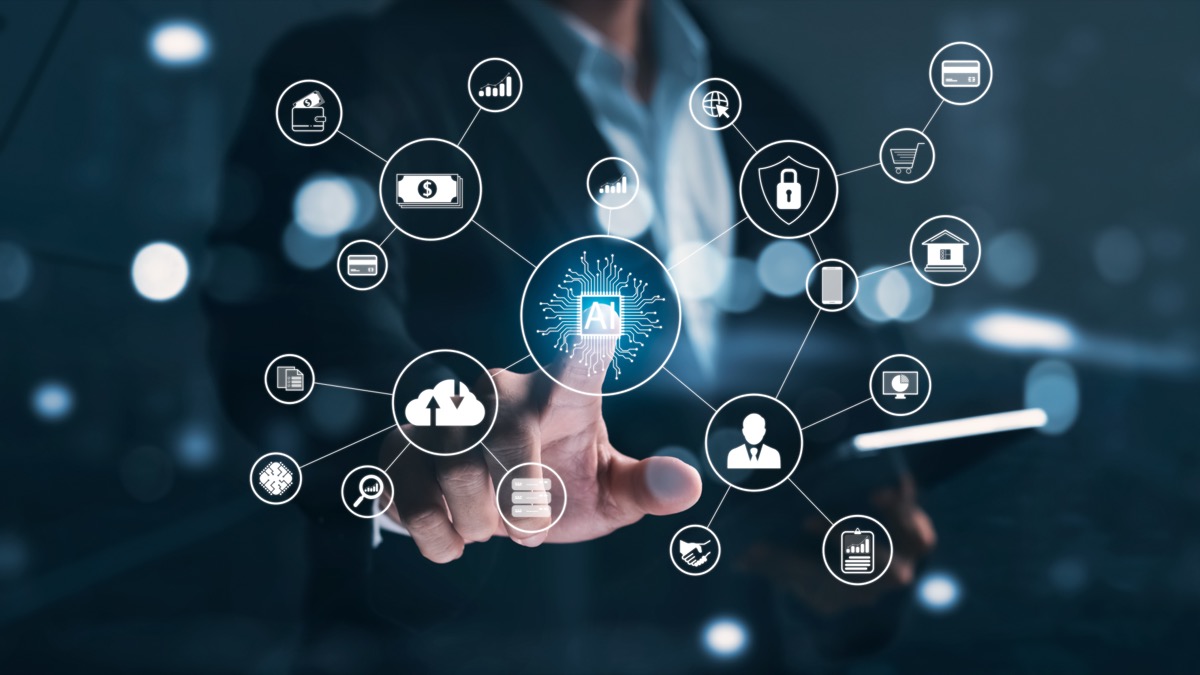
"AI in ERP" no longer means just a chatbot that answers questions or summarizes reports. In 2026, we are seeing Agentic AI — autonomous AI capable of executing multi-step processes on its own — become the core of next-generation ERP.
What sets Agentic AI apart from conventional AI is that it doesn't just "recommend" — it can actually "take action". For example:
- Automatically reschedules production when it detects that raw materials will arrive behind schedule
- Automatically switches suppliers when raw material prices exceed the set budget
- Issues Purchase Orders and sends orders to the most suitable vendor without requiring human approval at every step
- Adjusts delivery plans based on real-time demand signals from the CRM system
Oracle and Infor have already begun integrating Agentic AI into their ERP systems, signaling that ERP in 2026 will be designed to support autonomous agents from the ground up — not just as an afterthought.
Key Consideration
Agentic AI requires clean data and well-defined structures as its foundation. If your current ERP system still has data quality issues, adding AI will make problems worse, not better. Before thinking about AI, you must understand your ERP system and get your data in order first.
Trend 2: Composable/Headless Architecture — The Era of Modular ERP
In the past, changing ERP systems meant tearing everything down and starting from scratch — expensive and enormously risky. But in 2026, the concept of Composable Architecture or Headless ERP is completely changing this game.
Composable Architecture is an approach that designs ERP systems to be modular and API-first, meaning:
- Swap components freely without replacing the entire system — for example, change only the warehouse module without affecting accounting
- Connect to external systems easily through standard APIs without writing custom integrations every time
- Choose best-of-breed solutions for each component instead of being locked into a single vendor for everything
- Reduce risk in ERP implementation by deploying one module at a time
For mid-sized Thai businesses, this concept is crucial — it means you no longer need to buy an expensive all-in-one ERP from a major foreign vendor. Instead, you can choose an ERP that truly fits your business and gradually add modules as needed.
Trend 3: Sustainability Ledger — Carbon Accounting Held to the Same Standard as Financial Accounting
The Extended Producer Responsibility (EPR) regulations taking effect in 2026 are forcing manufacturers to manage environmental data seriously — no longer just an annual CSR report.
Sustainability Ledger is the concept that greenhouse gas emissions and resource consumption data must be recorded and audited to the same standard as manufacturing cost accounting. This means:
- Carbon footprint per BOM (Bill of Materials) must be calculated instantly, not estimated from averages
- Emissions data must be auditable just like financial statements, with a complete audit trail
- Scope 3 emissions (emissions from the supply chain) must be trackable throughout the entire supply chain
- Environmental reports must be generated automatically from the ERP system, not created separately in Excel
For Thai factories exporting to Europe or Japan, this trend is not about the future — it is the present. International customers are already requesting product carbon footprint data before making purchasing decisions.
Comparison: Traditional ERP vs 2026 ERP
| Aspect | Traditional ERP | 2026 ERP |
|---|---|---|
| AI | Report-summarizing chatbot, smart dashboard | Agentic AI that autonomously executes multi-step workflows |
| Architecture | Monolithic — locked into a single vendor's full suite | Composable — choose best-of-breed module by module |
| Sustainability | Separate CSR report, created manually in Excel | Sustainability Ledger integrated in ERP, held to the same standard as financial accounting |
| Implementation | Big-bang — replacing the entire system at once | Phased — implementing one module at a time, reducing risk |
| Cloud | On-premise or Cloud as optional | Cloud-first as the standard |
| Integration | Expensive custom integrations | API-first with instant connectivity |
The M&A Wave and Its Impact on Thai Businesses
Mergers and acquisitions in the enterprise software industry are accelerating dramatically, with M&A value increasing by 30-40% year-over-year, approaching $600 billion in 2026. A prominent example is FUJIFILM's acquisition of ETG Global to expand its ERP business.
The impact on mid-sized Thai businesses is multidimensional:
- Your current vendor may be acquired, causing changes in roadmap, pricing, or service quality
- AI is driving consolidation — smaller ERP providers without AI capabilities may not survive
- Buyers have greater negotiating power thanks to the options offered by composable architecture
- Demand for industry-specific ERP is growing — generic systems no longer meet the needs
For businesses currently choosing an ERP system, prioritize vendors with financial stability, a clear roadmap, and support for Thai manufacturing industry requirements. A thorough comparison of ERP and SAP or other systems can help mitigate the risks of this M&A wave.
How Thai Manufacturers Should Prepare
Based on these 3 trends, Thai manufacturers should start preparing today:
1. Data Cleansing
Whether you choose to use AI or not, clean and organized data is the foundation of everything. Verify that your master data for items, vendors, customers, and BOMs is accurate and up-to-date before considering anything else.
2. Assess Your Current ERP System
Ask yourself:
- How well does your current ERP system support APIs?
- Can you easily add or replace modules?
- Does the system already contain environmental data?
- Does your vendor have a clear AI roadmap?
If most of your answers are "no," it may be time to consider a new system. Read more about ERP systems for SMEs designed specifically for mid-sized businesses.
3. Start Collecting Sustainability Data Today
Even though Thai law may not yet strictly mandate carbon reporting, international customers are already requesting this data. Start by collecting energy consumption data, waste volumes, and carbon footprint of your main products.
4. Plan a Long-term Roadmap
Don't choose an ERP just because it solves today's problems. Think about what your business will need in 3-5 years and whether the system you choose can grow with your business.
ERP Readiness Assessment Checklist for 2026
- Master data (item, vendor, BOM) is accurate and up-to-date
- System supports APIs for connecting with external systems
- Energy consumption and emissions data is tracked in the system
- Vendor has a clear AI roadmap
- New modules can be implemented without disrupting existing systems
- There is a contingency plan if the vendor is acquired or changes direction
Conclusion
2026 is the year Manufacturing ERP undergoes a massive transformation. Agentic AI will turn ERP from a mere data-recording system into one that can take action on behalf of humans. Composable Architecture will make choosing and changing systems more flexible. And Sustainability Ledger will become the new standard that export businesses cannot avoid.
For Thai manufacturers, the most important thing is not rushing to adopt new technology, but building a strong foundation. Clean data, flexible architecture, and a trustworthy vendor are what will carry your business steadily through this era of transformation.
Read more: Guide to Preparing for ERP Implementation and How to Choose the Right ERP for Your Business