
- 15
- January
In today's digital era, where business competition intensifies every day, SMEs can no longer rely on traditional management methods — whether it's paper-based record-keeping, juggling dozens of Excel files, or communicating solely through LINE. ERP (Enterprise Resource Planning) is the tool that enables SMEs to compete effectively with large enterprises. Let us explore why SMEs need to adopt ERP systems.
1. Eliminate Redundant Work and Save Time
SMEs are known for their agility, but they also face limitations in workforce size. A single employee may need to handle multiple responsibilities simultaneously — sales, procurement, accounting, and warehouse management — making every minute count.
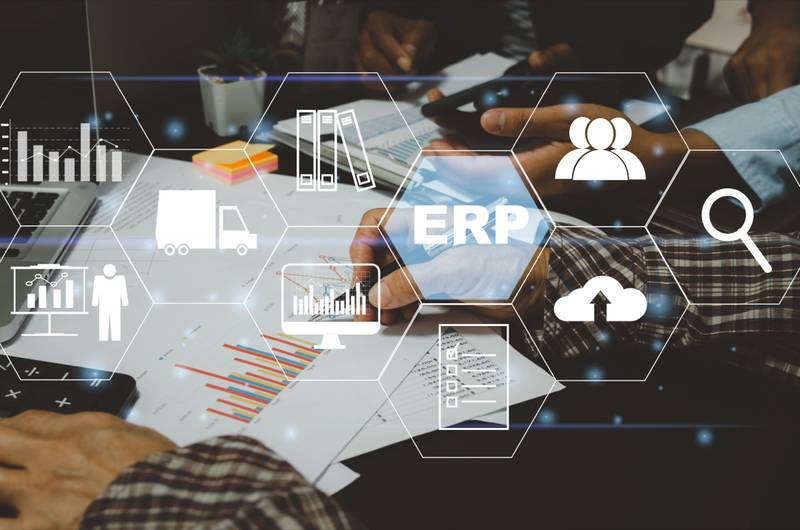
ERP systems centralize all data in one place. When the sales team creates a quotation, the information is automatically forwarded to accounting and warehouse departments — no redundant data entry, no cross-department phone calls, no Excel files going back and forth. Everything connects seamlessly.
For example, when a customer places an order, the salesperson simply records it in the ERP system. The system automatically deducts inventory, generates an invoice immediately, and notifies the shipping department to prepare the goods. All of this happens within seconds, replacing hours of traditional coordination.
2. Real-Time Business Visibility
A common problem in SME businesses is that owners cannot clearly see the overall business picture. What are today's sales figures? Which products are selling well? How is this month's profit looking? These answers often have to wait until month-end — which may be too late for decision-making.
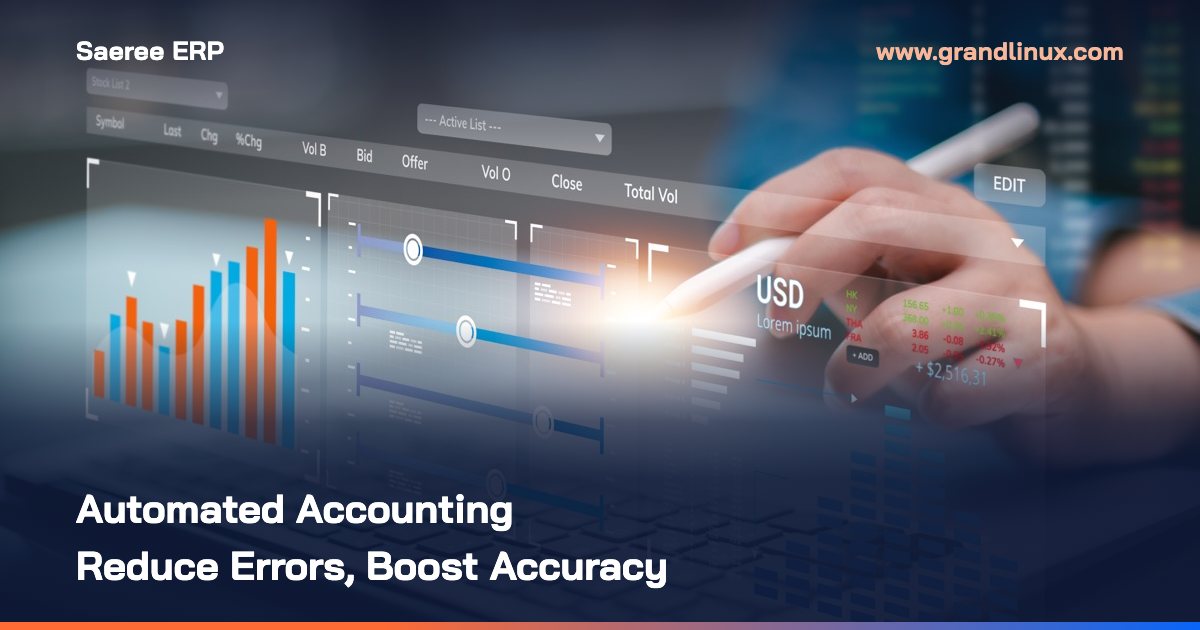
ERP systems come with dashboards displaying critical data in real time — daily, weekly, and monthly sales figures, remaining inventory levels, income and expenses, net profit, and outstanding receivables. All data is presented in easy-to-understand charts and tables, enabling SME executives to make quick and accurate decisions from anywhere.
3. Reduce Errors from Manual Work
Many SMEs still use Excel for various tasks — recording sales, tracking inventory, or managing accounting. The problem is that with dozens of Excel files, data often doesn't match. Sales figures don't align with inventory records, accounting totals don't match sales numbers. The root cause is manual data entry, which carries a high risk of errors.
ERP systems solve this problem precisely because all data resides in a single database. When a sales transaction is recorded, the system automatically calculates and updates all related data. No mistyped numbers, no broken Excel formulas, no missing data — making financial reports accurate and reliable.
4. Support Business Growth
Successful SMEs inevitably grow — increasing sales, more employees, expanding branches, and diversifying products. If you're still using a system designed for small-scale operations, it may not handle the growing workload, and replacing the entire system comes with high costs and significant time investment.
A good ERP system is designed to scale with your business. You might start with just accounting and sales modules, then add warehouse, HR, or manufacturing modules as the business grows — without replacing the entire system. Existing data remains intact, and employees don't have to learn a completely new system from scratch.
Saeree ERP is designed to support businesses from small to medium-sized enterprises, offering a comprehensive suite of 16 modules that can be selected according to your needs, helping your business grow steadily and sustainably.
Investing in an ERP system is not an expense — it's an investment in the future of your business.
— Saeree ERP Team
5. Cost-Effective in the Long Run
Many may view ERP systems as too expensive for SMEs. However, when you look at the full picture, the true cost of NOT using ERP is far greater — hidden costs from data entry errors, costs of hiring additional staff for redundant work, costs of poor decisions due to inaccurate data, and costs of losing customers due to delayed service.
ERP systems significantly reduce these costs. Based on Saeree ERP customer experience, SME businesses have reduced redundant work time by up to 40%, decreased document errors by over 60%, and accelerated financial closing from 2 weeks down to just 3-5 days.
Furthermore, Saeree ERP offers packages specifically designed for SMEs at accessible prices. There's no need for a large upfront investment — you can start with essential modules and expand gradually as your business grows.
Conclusion
In today's digital age, ERP systems are no longer tools exclusive to large enterprises. SMEs that aspire to grow sustainably need efficient management systems — whether it's eliminating redundant work, gaining real-time business visibility, reducing errors, supporting scalability, or lowering long-term costs. All five reasons clearly demonstrate that ERP is a worthwhile investment for SMEs today.
If you're ready to elevate your SME business with an ERP system designed specifically for Thai businesses, you canschedule a demo or contact our teamfor consultation on implementing ERP for your business