
- 20
- April
On April 13, 2026, Stanford HAI (Human-Centered AI Institute) released the AI Index 2026 — the annual state-of-AI report that policymakers, investors, and Fortune 500 strategy teams use as the official baseline. This year's headlines: Anthropic tops the Arena leaderboard, the US-China performance gap has narrowed to 2.7%, and corporate AI investment in 2025 more than doubled to $581 billion.
The report runs several hundred pages. We'll distill it into the 7 takeaways most relevant to enterprises — and, more importantly, how to put them to work in an ERP / AI strategy this year.
In short: The Stanford AI Index 2026 shows Anthropic at the top of Arena for the first time (Claude Opus 4.6 = 1,503 vs ByteDance 1,464). Corporate AI investment in 2025 hit $581B (2x YoY). China closed the gap to 2.7% while spending 23x less than the US. AI compute has grown 30x since 2021, and entry-level AI jobs are shrinking while mid/senior roles stay stable.
1. Anthropic Tops the Arena Leaderboard
Based on LMArena data (the community blind-test platform) as of March 2026, Anthropic is #1 for the first time with Claude Opus 4.6, followed by ByteDance just 39 points (~2.7%) behind:
| Rank | Model | Arena Score |
|---|---|---|
| 1 | Anthropic Claude Opus 4.6 | 1,503 |
| 2 | ByteDance Dola-Seed-2.0-Preview | 1,464 |
| — | xAI, Google, OpenAI, Alibaba, DeepSeek | All within a small gap in the top tier |
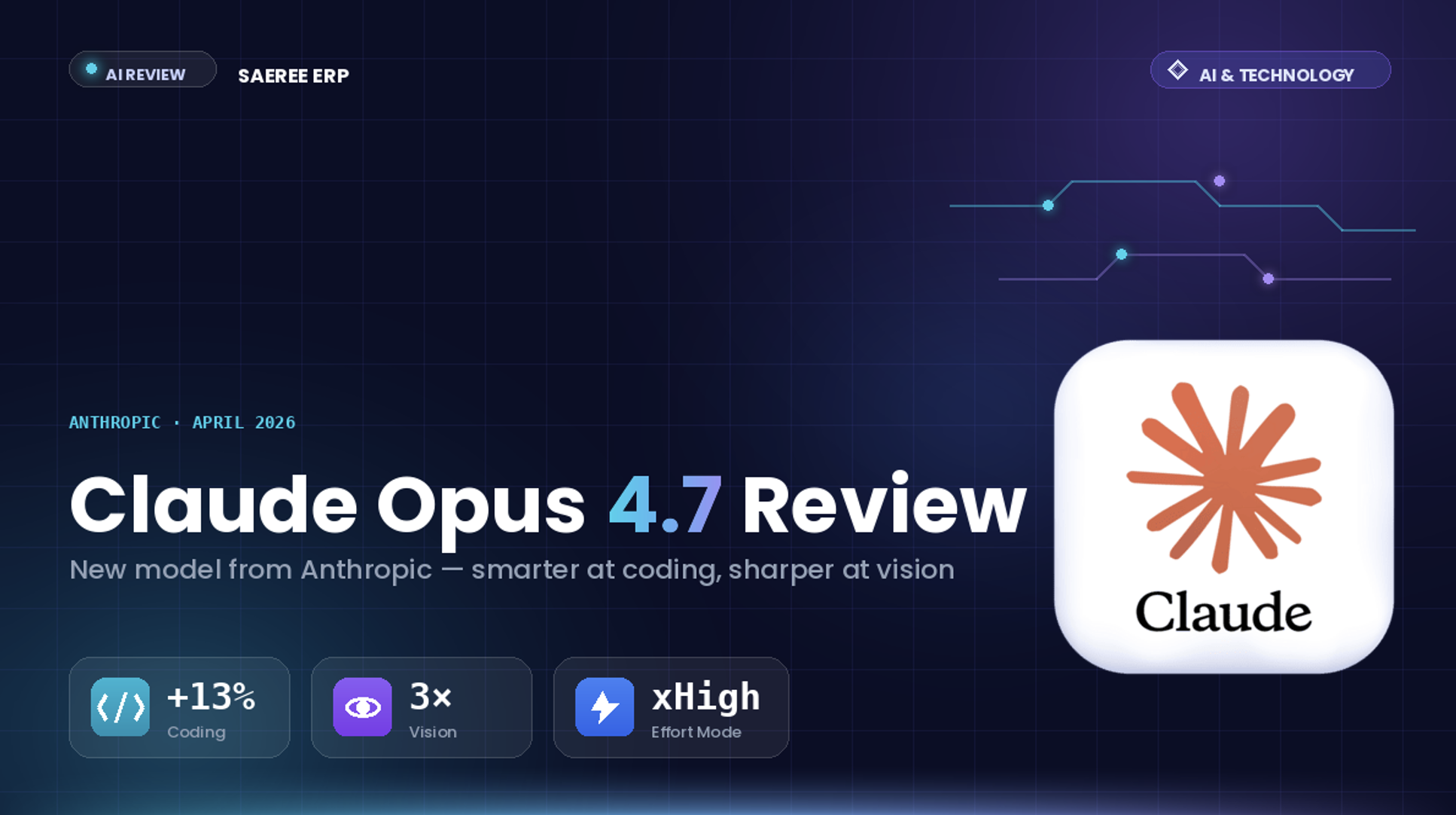
An important footnote: the AI Index data was cut off before Claude Opus 4.7 shipped (~April 2026), so the chart shows Opus 4.6 only. With 4.7 in the mix, Anthropic's lead widens further (see the broader landscape in ChatGPT vs Claude vs Gemini and AI Model Comparison).
Also notable: the whole top tier — Anthropic, xAI, Google, OpenAI, Alibaba, DeepSeek — is now bunched together. The spread between leaders is shrinking, not widening. The competition is now about execution, not raw capability (see the frontier-race context in AI Model War 2026).
2. $581B in AI Investment — Doubling YoY
Global corporate AI investment in 2025 jumped from $253B to $581B — more than doubling in a single year. The US alone accounted for $344B. Interestingly, private investment (not M&A) drove the surge, not just big-company acquisitions.
Put in business terms: when Facebook used to spend $1M on AI, an SME could spend $0. Now that Meta spends $10B, the SME has to budget at least $10K — not to compete with Meta, but because regional peers in the same segment are already investing. If you don't, you get disrupted from within your own market (see the ROI framework in AI Investment ROI).
Note: The Stanford AI Index is an annual report from Stanford HAI (Human-Centered AI Institute) — widely treated as the most authoritative state-of-AI report. Government policymakers, VC investors, and Fortune 500 strategy teams use it as their baseline for AI decisions. The full report is available at hai.stanford.edu (see References).
3. China vs US — 2.7% Gap, 23x Less Spending
This is the most-discussed section of the AI Index 2026 — because it directly challenges the assumption that "whoever spends more wins":
| Metric | US | China |
|---|---|---|
| 2025 AI investment | $344B | ~$15B (23x less) |
| Top-model performance | Anthropic 1,503 | ByteDance 1,464 (-2.7%) |
| Industrial robots installed 2025 | 34,200 | 295,000 (8.6x more) |
The paradox is stark: China spends dramatically less, ties on model quality, and leads outright in physical robotics. The single-year industrial-robot install count in China is 8.6x the US figure — a clear signal that AI in the real world (manufacturing, logistics) is already a Chinese game (see China Tech Strategy and China AI Education & Jobs, and the industrial-robotics tie-in at Gemini Robotics-ER 1.6).
The geopolitical implication: the US is playing capability-via-capital (spend to buy time), China is playing capability-via-efficiency (drive costs down via open source and optimization). Both approaches now converge at similar performance. Thai enterprises must consciously choose which ecosystem becomes their default integration target.
4. Carbon Footprint — AI Burning 14-27x More
The report is blunt about how much power training new models consumes:
- Grok 4 training — approximately 72,000-140,000 tons of CO₂
- GPT-4 training (earlier generation) — ~5,184 tons
- Ratio — 14 to 27x in just a few years
Thai context: sustainability-disclosure rules are moving toward mandatory. Any organization running heavy AI workloads (in-house training, large GPU clusters) needs to start tracking AI carbon now, not next year. Using managed AI (Claude API, OpenAI API, Gemini API) shifts most of the carbon burden to the vendor — but the ESG report still has to account for it (see the governance framework in AI Governance).
5. The Job Market Shifts — Entry-Level AI Roles Decline, Mid/Senior Stable
Employment data in the AI Index 2026 aligns with this year's layoff news:
- Entry-level AI positions — declining. Companies are letting AI do the junior work
- Mid and senior roles — stable, because they're needed to review and oversee AI output
- Deep AI specialists (ML engineers, AI safety, infrastructure) — severely undersupplied
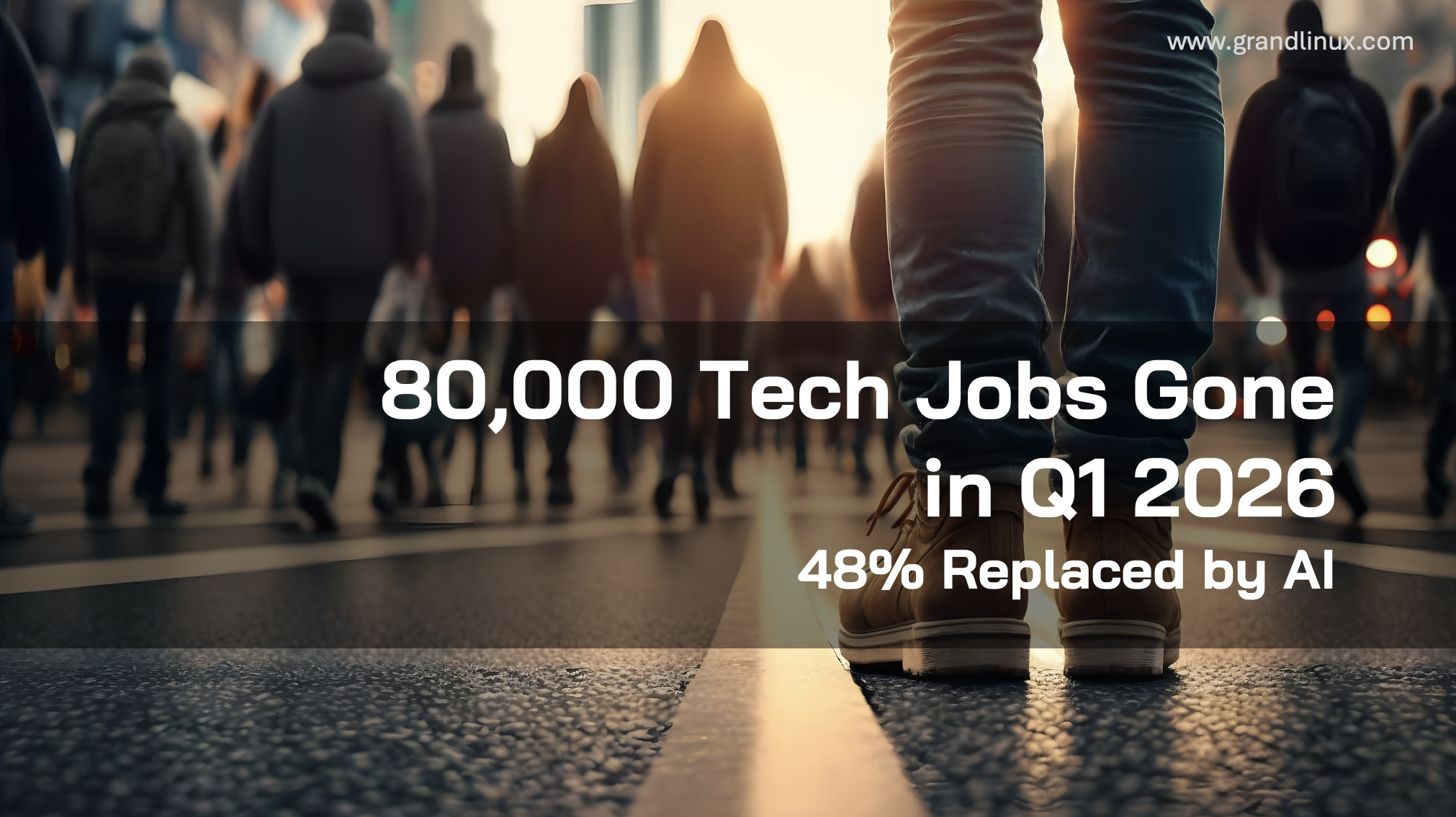
Systemic implication: AI is eating the bottom rung of the career ladder. Fresh graduates struggle to get in, but those 3-5 years in are safe. The long-term problem: if entry-level jobs disappear, where do tomorrow's mid/senior hires come from? Education and onboarding systems will need to be redesigned end-to-end (see the latest layoff data in AI Layoffs Q1 2026).
6. Public Opinion — 59% Say AI Benefits Outweigh Drawbacks
The global AI Index 2026 survey found that 59% of respondents say "AI's benefits outweigh its drawbacks" — up from 55% in 2024, despite a year full of risk stories and layoffs.
Thai context: the report doesn't break out Thailand specifically, but the broader Asia trend is consistently more positive than Western sentiment. Acceptance of AI in workplaces and schools in Thailand likely tracks the Asia average, which means pushing AI features into ERP and software that employees already use shouldn't meet the same resistance seen in Europe or the US (see the AI-in-business overview in AI Tools for Business).
7. Secondary Stats — GitHub + Compute
Beyond the headline numbers, two secondary data points tell the diffusion story:
- GitHub AI projects — 5.58 million repos in 2025 (up 23.7% YoY)
- AI compute — growing 3.3x per year since 2022, 30x total since 2021
The signal: AI work is no longer concentrated in five big labs (OpenAI, Anthropic, Google, Meta, xAI). Millions of developers worldwide are building real apps on top of ready-made APIs, and falling compute costs let anyone experiment. For enterprises, you don't need to train your own model — plug into an API, design the workflow that fits your domain, and you're shipping (see the agent-design lens in Agentic AI).
How Thai Enterprises Should Read This Report
The AI Index 2026 doesn't declare a "winner" in the model wars. For Thai enterprises, four practical takeaways:
- 1. Don't pick a side between Anthropic / OpenAI / Google — the capability gap is tiny (2-5%). Choose by price, latency, compliance, and data residency, not raw capability
- 2. AI compute is 30x cheaper — use cases that didn't pencil out last year may now. Revisit the backlog
- 3. Your regional competitors are already spending — if you don't allocate an AI budget this year, you'll be the only one in the segment without one. Target 3-5% of IT budget for AI pilots
- 4. Consider Chinese models — DeepSeek, Qwen, ByteDance are near-parity at lower prices. Don't rule them out by default, but do tighten data-governance policies
Saeree ERP and the AI Index
Saeree ERP is not tied to any single LLM vendor. We track the AI landscape continuously (including this report) so customers can choose the provider that fits the use case rather than be locked in to one.
Current status: Saeree ERP is developing an AI Assistant (in training since March 2026, not yet in production). The architecture is being designed to support multiple LLM providers (Claude, GPT, Gemini, Qwen, DeepSeek) so customers can select a provider aligned with their internal policies.
Honestly: Thailand is still very far from the $581B number — Thailand is not an AI research power. But we are an AI user with choice, and choosing well today matters more than trying to catch up to the US or China.
Suitable / Not Suitable — Using the AI Index as a Decision Criterion
This report is not a "how to pick your AI vendor" manual. It can be used well or badly. This table sorts the cases:
| ✓ Use the AI Index as a criterion | ✗ Do not use it for this |
|---|---|
| Plan your 2026-2027 AI budget (use investment + compute trends as baseline) | Decide which LLM license to buy (you must test on your own workload) |
| Assess how mature your industry is (via GitHub + compute stats) | Predict ROI for a specific AI project (that's a bottom-up calculation) |
| Draft a sustainability / carbon roadmap before regulation mandates it | Find the "best" vendor — Arena rankings shift weekly |
| Communicate to executives / boards with credible numbers | Copy-paste a Fortune 500 playbook |
| Plan career paths + reskilling for entry-level staff | Justify layoff decisions on AI Index numbers alone |
Simple rule: the AI Index is great for "direction," not for "specific decisions." Use it to check your compass, not to pick a product.
"In 2026, AI isn't the future anymore — it's the present, and 59% of people feel it's more good than bad."
— Saeree ERP, 2026