- 27
- March
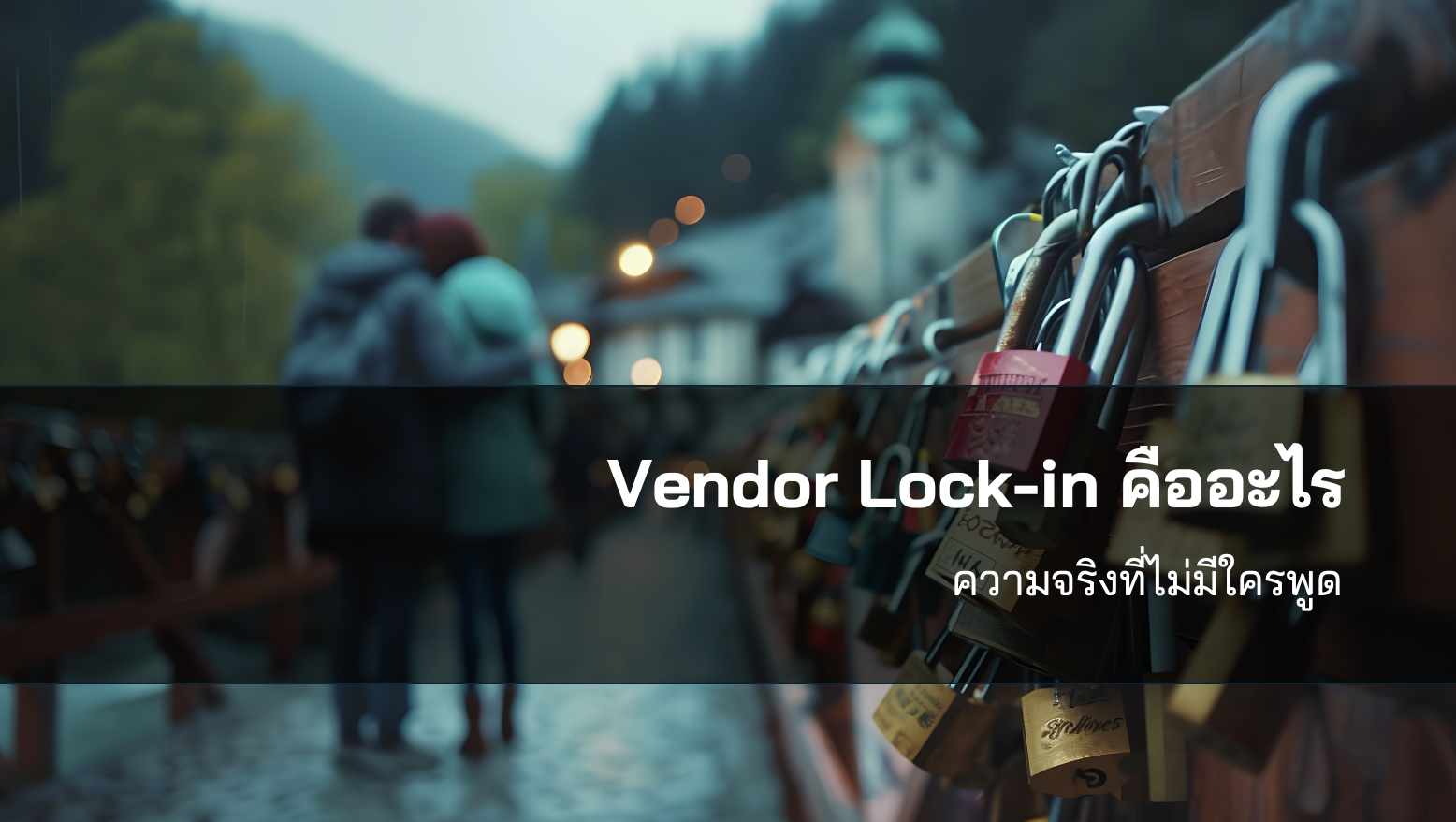
"Vendor Lock-in" -- this term gets thrown around constantly in the IT world, especially when comparing software. But have you ever stopped to ask: Who coined this term? What was the intent behind it? And who actually benefits from it?
What Is Vendor Lock-in? -- Back to Where It Started
The term Vendor Lock-in first appeared in the IT industry in the 1990s, coined by Gartner and industry analysts to describe a situation where customers are "tied" to a single vendor and cannot switch to another -- or can, but at a cost so high it is not worth it.
But look closer -- this term did not come from customers. It came from vendors themselves, used as a weapon to attack their competitors.
Think about it: If you are Vendor B and want to lure customers away from Vendor A, what is the easiest approach? Make customers afraid that they are "locked in" with A, then position yourself as the "way out." That is exactly how this term gets used.
In Business -- Everyone Wants You as Their Customer
Let us be honest and not sugarcoat things -- every business in the world wants customers to choose them, stay with them, and keep coming back. No company builds a business hoping their customers will switch to a competitor.
If that counts as "Vendor Lock-in," then look at these everyday examples:
| Example | The Situation | Do We Call It "Lock-in"? |
|---|---|---|
| Netflix / Disney+ | Some shows are available on only one platform -- you must subscribe to watch | Nobody calls it that -- they call it "Exclusive Content" |
| Apple | iPhone + Mac + iCloud + Apple Watch work seamlessly only within Apple | They call it an "Ecosystem," not Lock-in |
| Odoo | Community edition is free but limited; Enterprise requires paid partners | Yet Odoo tells customers "We are Open Source, no Lock-in" |
| Coffee shops | Collect points, buy 10 cups get 1 free | They call it a "Loyalty Program" and nobody complains |
See? The exact same thing, just with a different label, and the perception changes entirely.
Vendor Lock-in -- A Term That Benefits Nobody
When you really think about it, "Vendor Lock-in" is a negative term for everyone involved:
- Customers -- hear it and get scared, paralyzed by indecision, or make the wrong choice out of fear
- The vendor being attacked -- loses customers, even though they may genuinely have the better system
- The vendor doing the attacking -- locks customers in just the same, simply switching from "locked with Vendor A" to "locked with Vendor B"
Here is the question: If you cannot develop the system yourself, then whether you choose SAP, Oracle, Odoo, or any other ERP -- you will depend on that vendor regardless. You are just switching from "locked with Vendor A" to "locked with Vendor B." So what does "Vendor Lock-in" even mean?
Everything Costs Money -- No Need to Sugarcoat It
Before we even talk about ERP, look at real life:
- Want to stay healthy and age well? -- You have to invest: exercise, eat well, see doctors regularly
- Get sick? -- You pay for treatment, doctors, medication
- Want your loved ones to look and feel great? -- You invest in clothes, accessories, taking care of each other
- Want your children in a good school? -- You pay tuition
Does anyone call these things "lock-in"? -- No, because they are investments in the things you have chosen.
ERP is no different. If you choose a system that is good and fits your business, the money you spend is not "the cost of being locked in" -- it is "an investment in growth."
A Real Case -- When "Vendor Lock-in" Cost 3 Years of Lost Opportunity
A client was about to choose an ERP system when another vendor came in and said: "If you choose that company, there is only one firm supporting it. If they shut down, you are done. But if you choose us, we have many partners -- nothing to worry about."
The client got scared and chose the vendor with many partners -- an Open Source ERP.
The result after 3 years:
- Still not finished -- the system was nowhere near production-ready
- The team kept changing -- partners rotated people in and out; every new person had to be briefed from scratch, like tearing down a house and rebuilding it each time
- Massive budget overrun -- the total investment could probably have paid for SAP at that point
- 3 full years of lost opportunity -- had they chosen a ready-to-use system from day one, they would have been running it for 3 years already
A single phrase -- "Vendor Lock-in" -- cost that client money, time, and opportunity.
A Better Way to Look at It -- Choosing ERP Is Like Choosing a Life Partner
Instead of thinking "I am locked in," try reframing it as "choosing a business life partner."
Marriage is a form of "lock-in" too, right? You choose one person, commit to each other, and build a life together. Nobody calls marriage a "trap."
Because a good life partner means:
- Mutual dependence -- one is strong in this area, the other in that area, complementing each other
- Growing together -- as the family expands and the business grows, you adapt together
- Supporting each other to prosper -- not holding each other back, but pushing each other forward
- It only gets better -- the longer you are together, the deeper the understanding and the smoother the collaboration
Choosing ERP should work the same way -- the customer gets a system that works well and fits their business, while the developer gets feedback, better features, experience, and the chance to improve the product. Win-win for both sides.
From Our Perspective -- We Need Our Customers' Support
Let us be straightforward -- we need customers too. No company in the world does not need customers. But what we want is not just "money" -- it is:
- To build a great product -- every client, every piece of feedback, every pain point they share with us is what makes the system better
- To reduce pain points for our clients -- when clients can work more easily, close their books faster, manage inventory more accurately -- that is what we take pride in
- To grow together -- when clients succeed, we gain better features, case studies, and trust
As for features and UI -- technology catches up fast these days. Want a beautiful interface? Money can buy it. Want a specific feature? It can be developed. What truly makes the difference is the people behind the product.
For organizations just starting their ERP search, read How to Choose an ERP -- 7 Factors to Consider and What to Do When Your Organization Wants to Adopt ERP
Supporting Thai ERP = Supporting the Thai Economy
Here is another angle many people overlook -- where does your ERP spending actually go?
| Choosing a Foreign ERP | Choosing a Thai ERP |
|---|---|
| License fees flow out of the country every year | Money circulates within Thailand |
| Expensive foreign consultants | Creates jobs and income for Thai professionals |
| Support across time zones and languages | Thai-language support that understands the Thai context |
| Developed for the global market | Developed specifically for Thai business needs |
Saeree ERP is a Thai company, developed by Thai people, understanding ERP systems that serve Thai businesses. When Saeree ERP grows, it means Thai software building a reputation and bringing revenue into the country -- instead of sending money overseas every year.
We don't have much to offer -- just good software that solves real problems. We can't compete in size, manpower, or capital. All we have is the heart to fight, to build a great ERP system for our customers, and to never let them down. That's it.
- Sureeraya Limpaibul, Founder of Saeree ERP
Conclusion -- We Are Lucky to Have Great Customers
Throughout our company's history, what brought us this far was never marketing or advertising -- it was great customers who believed in us, trusted us, and supported our growth.
And we have never let them down -- our company's track record is the proof.
We compete on what Thai customers can actually measure, not on corporate scale. What we bring to the table is:
- The heart to fight -- building an ERP system that actually works for our customers
- Software that solves real problems -- not just sales pitches, but genuine pain relief for our clients
- Long-lasting relationships -- when customers succeed, we gain better features and grow together
- One promise -- we will never let you down
Because at the end of the day -- "Vendor Lock-in" is just words, but track record and trust are the real proof.