- 26
- February
Thailand has over 200 government agencies, each with its own IT systems, Data Centers, servers, and IT staff. The result is redundant, scattered, and enormously wasteful IT spending. This isn't a new problem, but there's now a solution: GDCC (Government Data Center and Cloud Service), a centralized government cloud that saves up to 850 million baht per year. This article explains what GDCC is, how it works, and how agencies planning to use ERP on government cloud should prepare.
Problems with Thailand's Government IT Infrastructure
Before understanding GDCC, we need to understand the existing problems. Thailand's government IT infrastructure has accumulated issues over many years:
- Redundant investment — Each agency purchases its own servers, storage, and network equipment, even though many systems use less than 30% of purchased capacity
- Inconsistent security — Some agencies have complete firewall systems, while others lack even reliable backup systems
- IT staff shortages — Smaller agencies lack dedicated IT teams and rely on potentially inconsistent outsourcing
- None Disaster Recovery capabilities — If unexpected events occur such as fire, flood, or ransomware attacks, data could be permanently lost
- Inter-agency connectivity is difficult — Each agency uses different technology, making data exchange cumbersome and time-consuming
These problems have prevented Thailand from fully achieving Digital Government despite years of policy initiatives
Is your agency still running this on Excel and paper?
Saeree ERP is built around Thai public-sector rules — 3 fund sources · reserve/commit/accrue · fixed assets · procurement · memo-style approvals
What is GDCC
GDCC stands for Government Data Center and Cloud Service, a centralized cloud service for Thai government agencies operated under the Ministry of Digital Economy and Society (MDES), with National Telecom (NT) as the infrastructure provider.
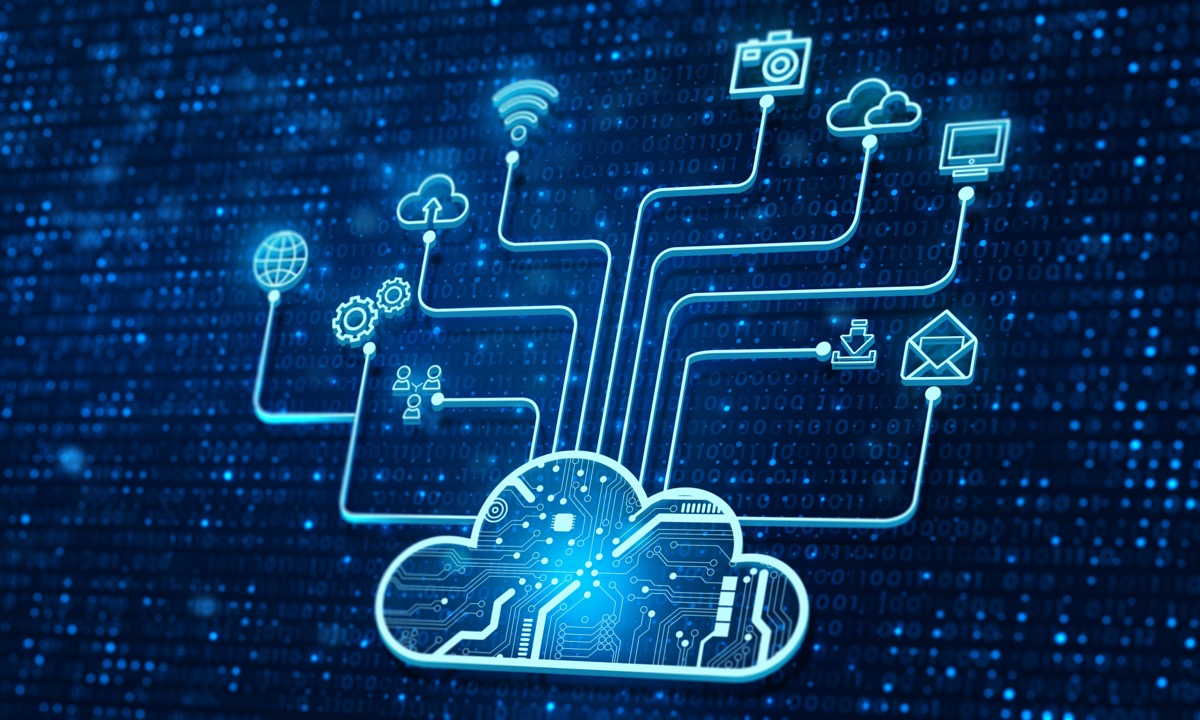
The core concept of GDCC is centralizing government IT infrastructure so agencies can request cloud resources instantly without investing in their own servers, building their own data centers, or hiring IT teams to maintain infrastructure.
GDCC vs Commercial Cloud — What's the Difference?
Commercial clouds like AWS, Azure, or Google Cloud are expensive services with data centers overseas. GDCC is a cloud service provided by the government to agencies at no cost (at the basic IaaS level), with data centers located in Thailand and compliant with governmentsecurity standards
Notable GDCC Statistics
Key data showing the scale and impact of GDCC:
| Metric | Figure |
|---|---|
| Number of agencies using the service | 219 agencies |
| Number of systems served | 3,065 systems |
| Annual budget savings | 850 million baht |
| Infrastructure provider | NT (National Telecom) |
| Supervising authority | Ministry of Digital Economy and Society (MDES) |
| Digital ranking target | Top 30 globally |
The 850 million baht annual savings come from agencies not having to invest in their own servers and IT equipment, hire infrastructure maintenance staff, or pay for electricity and separate data center space.
Core GDCC Services
GDCC doesn't just provide bare servers — it offers comprehensive services for government agencies:
1. Infrastructure as a Service (IaaS)
Cloud infrastructure services including Virtual Machines, Storage, and Networking that agencies can request on demand, scale up or down anytime, without purchasing hardware.
2. Platform as a Service (PaaS)
Platform for developing and deploying applications, including ready-to-use databases, web servers, and application servers, freeing development teams from infrastructure management.
3. e-Office (Electronic Office System)
Particularly valuable for small agencies, e-Office is available for free to government agencies, covering electronic correspondence, circular document systems, and document registration — helping paper-based agencies transition to digital immediately.
4. Government Data Lake
Big Data storage and analytics for government, enabling agencies to share and connect data more easily — a crucial foundation for Data-Driven Government.
5. Disaster Recovery as a Service (DRaaS)
Data backup and system recovery services ensuring critical data is never lost, even during unexpected events — something many agencies still lack. Read more about Disaster Recovery for ERP Systems
Benefits of GDCC for Government Agencies
Using GDCC instead of self-managed IT investment offers many advantages:
1. Significant Budget Savings
No need to invest in servers, storage, UPS, cooling systems, or networking equipment. Budget previously used for hardware procurement can be redirected to software development and workforce training.
2. High Security Standards
GDCC has strict security standards covering Physical Security, Network Security, and Data Security. Additionally, DGA (Digital Government Development Agency) is currently in the process of obtaining certification for ISO/IEC 27701:2019 for Personal Information Management Systems (PIMS), which will strengthen confidence in personal data protection compliance with PDPA.
3. On-Demand Scalability
When systems need more resources, you can request additional CPU, RAM, or Storage immediately — no waiting months for procurement processes.
4. Built-in Disaster Recovery
GDCC has built-in Backup and Disaster Recovery. Data is backed up in multiple locations, reducing risk from natural disasters or cyber attacks.
5. Reduced Internal IT Workload
IT teams no longer need to maintain hardware, update firmware, or manage infrastructure security patches — they can focus on developing and maintaining mission-critical applications.
6. Easier Inter-Agency Connectivity
When multiple agencies are on the same cloud, connecting and exchanging data becomes much easier — forming the foundation of Smart Government where data flows seamlessly between systems
7 MDES Flagship Digital Initiatives
The Ministry of Digital Economy and Society (MDES) has established 7 Flagship Digital Initiatives to drive Thailand toward a Top 30 global digital competitiveness ranking:
- Cloud First Policy — Policy requiring government agencies to prioritize cloud over purchasing hardware, with GDCC as the primary option
- Government Data Integration — Cross-agency data connectivity, reducing redundant document requests from citizens
- Digital ID — Digital identity verification system for citizens and government officials
- e-Government Services — Comprehensive online government services, reducing in-person visits
- Cybersecurity — Elevatingcybersecurityacross all government agencies
- Digital Workforce — Developing digital skills for civil servants and government personnel
- Smart City Infrastructure — Digital infrastructure for smart cities
GDCC is the heart of these initiatives, as it provides the infrastructure that makes every project feasible.
ERP on Government Cloud — Why Readiness Matters
As GDCC becomes the primary government infrastructure, the key question for agencies is "Is your current ERP system ready to run on government cloud?"
ERP is the core system of any organization, covering finance, accounting, procurement, human resources, and purchasing. If your ERP isn't cloud-ready, several problems arise:
- Self-managed servers — While other agencies have migrated to cloud, agencies with on-premise ERP will face increasing IT burdens
- Difficult GFMIS integration — The GFMIS (Government Fiscal Management Information System) being developed as a cloud version will integrate more easily with systems on the same cloud
- Failing new standards — When Cloud First policy is fully enforced, non-cloud systems may fail government IT standard assessments
- Missing Data Integration opportunities — As government data connects through the Government Data Lake, non-cloud systems will be excluded from automatic data connectivity
Government cloud is no longer optional — it's becoming a fundamental requirement. Agencies that prepare early will gain advantages in budget efficiency, security, and connectivity with central systems.
- Saeree ERP Team
Saeree ERP and GDCC — Ready for Government Cloud
Saeree ERP was designed from the start for Thailand's government context and is fully capable of running on GDCC cloud infrastructure:
| Requirement | How Saeree ERP Supports It |
|---|---|
| Cloud-Ready Architecture | Web-based architecture, runs through browsers without client installation, supports deployment on GDCC Virtual Machines |
| GFMIS Integration | Supports integration with the Comptroller General's GFMIS for both disbursement and budget data exchange |
| Thai Accounting Standards | Supports Thai government Chart of Accounts and accounting standards without additional customization |
| ISO/IEC 29110 | Certified for ISO/IEC 29110:2011 software development process standard, ensuring quality assurance |
| security standards | Supports Multi-factor authentication, Role-based Access Control, and complete Audit Trail |
| Comprehensive Modules | Covers finance, accounting, inventory, procurement, human resources, and executive reporting in a single system |
Importantly, Saeree ERP does not depend on foreign cloud providers and can run on GDCC with data centers in Thailand, keeping all data under Thai law — meeting both security and PDPA compliance requirements.
Steps for Agencies Wanting to Start ERP on GDCC
- Assess readiness — Survey existing IT systems to identify which are cloud-ready and which need upgrades
- Request GDCC services — Register for cloud resources through GDCC channels, specifying CPU, RAM, and Storage needs
- Choose a Cloud-Ready ERP — Select an ERP designed for cloud deployment and Thai government context, such as Saeree ERP
- Plan Migration — Set timelines for data migration from legacy systems, prepare Backup and Rollback plans
- Deploy and test — Install ERP on GDCC, test connectivity with GFMIS and other systems
- Train and transition — Train users, go live with full support team during the transition period
Summary
GDCC is the central cloud infrastructure that has fundamentally changed how Thai government agencies think about IT — from every agency investing and managing their own systems to using a centralized cloud that is secure, standardized, saves 850 million baht annually, and enables easy inter-agency connectivity.
For agencies looking for an ERP system ready for government cloud, you canschedule a Saeree ERP demo or contact our consulting teamto assess your organization's readiness for transitioning to Digital Government