
- 28
- March
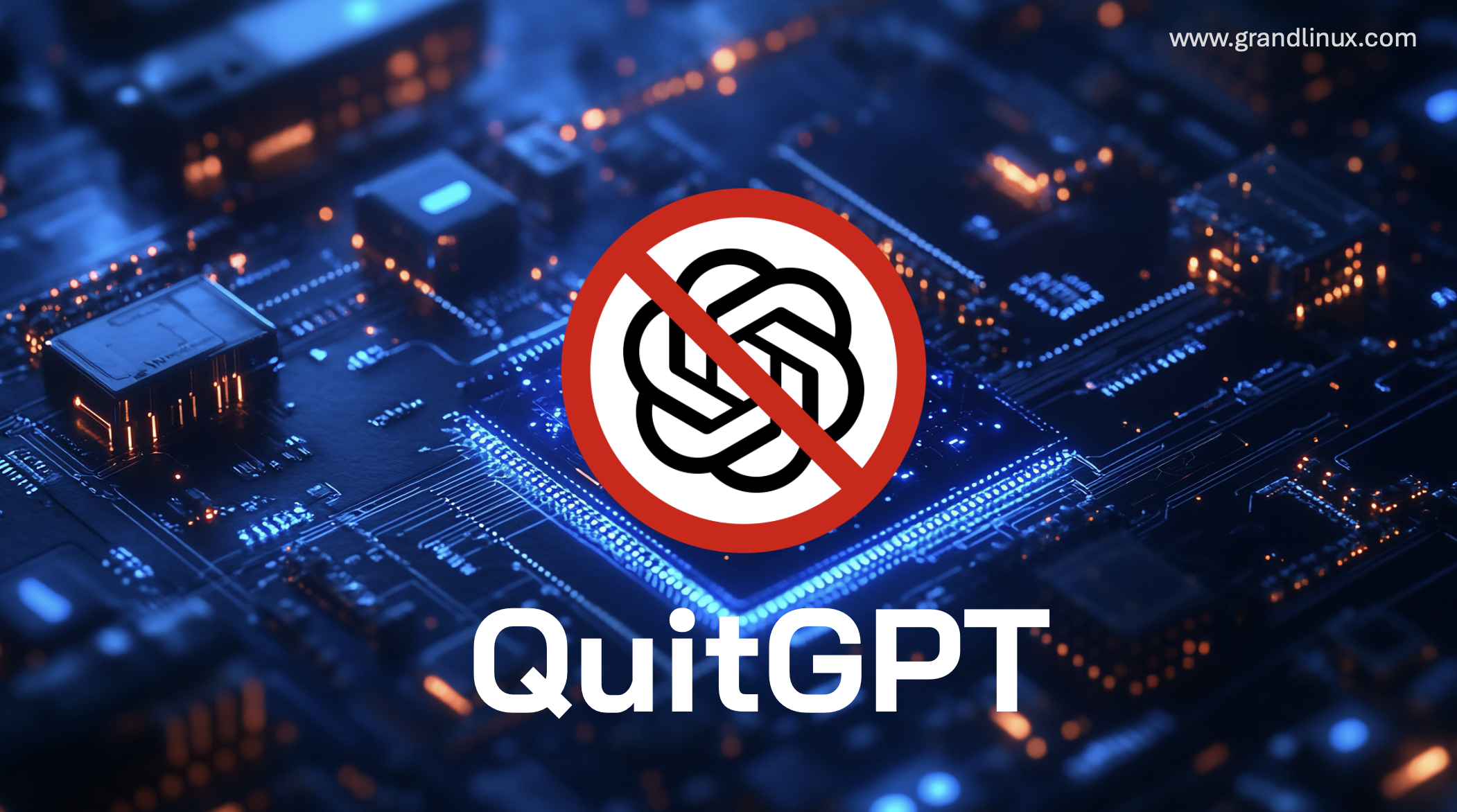
In late February 2026, the tech world was shaken when OpenAI signed a contract with the U.S. Department of Defense (Pentagon) to provide classified AI services. The hashtag #QuitGPT became a global movement overnight, with over 2.5 million supporters joining the cause. ChatGPT uninstalls surged by 295% within hours. This article analyzes what happened, why it matters for Thai organizations, and how to choose an AI vendor safely in an era where "trust" has become the most critical factor.
What Happened with #QuitGPT?
This event didn't happen in a single day — it was the cumulative result of multiple decisions that made users increasingly question OpenAI's direction.
| Date | Event | Impact |
|---|---|---|
| Feb 28, 2026 | OpenAI signed Pentagon deal for classified AI services | #QuitGPT began trending on X (Twitter) |
| Feb 28, 2026 | Anthropic refused the same deal on ethical grounds | Claude hit #1 on US App Store for the first time |
| Mar 1, 2026 | ChatGPT uninstalls surged 295% overnight | #QuitGPT supporters exceeded 2.5 million |
| Mar 3, 2026 | Sam Altman admitted the rollout was "opportunistic and sloppy" | Revised contract barred domestic surveillance of US persons |
| Mar 2026 | Caitlin Kalinowski resigned from OpenAI (Internal Resignations) | Reinforced concerns about internal organizational culture |
Key Takeaway
The #QuitGPT movement wasn't just about "which app is better" — it was a turning point for the entire AI industry where users began asking: "Who owns my data?" and "What ethical stance does the AI company I'm using actually hold?"
Why This Matters for Thai Organizations
Many may think #QuitGPT is purely a U.S. issue with no relevance to Thailand. But in reality, numerous Thai organizations are directly using AI from these companies — whether ChatGPT, Claude, Gemini, or Copilot — for tasks such as:
- Drafting TORs and procurement documents — budget data enters AI
- Analyzing financial data and reports — accounting figures enter AI
- Writing policies and internal regulations — organizational strategy enters AI
- Translating documents and contracts — legal information enters AI
If the AI vendor you use can change its data policy at any time, or share data with military agencies without notice, can you still be confident that your organization's data is safe? This is why AI Governance is no longer a distant concern.
AI Vendor Trust Framework — 5 Criteria Organizations Should Evaluate
Based on the #QuitGPT incident, we've summarized 5 criteria that organizations should use to evaluate AI vendors before making a decision:
| Criteria | OpenAI (ChatGPT) | Anthropic (Claude) | Google (Gemini) |
|---|---|---|---|
| 1. Ethical Stance | Signed military contract (reversed previous stance) | Refused military contract, has Responsible Scaling Policy | Has AI Principles but previously worked with defense (Project Maven) |
| 2. Data Policy | Uses Free tier data for training, Enterprise tier exempt | Does not use user data for training (all tiers) | Uses Free tier data for training |
| 3. Transparency | Converted from Non-profit to For-profit (heavily criticized) | Public Benefit Corporation from inception | Public company with shareholder obligations |
| 4. Financial Performance | Annualized revenue >$25B (market leader) | Annualized revenue $19B (up from $9B end of 2025) | AI revenue bundled in Google Cloud (~$40B+) |
| 5. Internal Resignations | Multiple departures (Caitlin Kalinowski, former Safety Team members) | Stable team, no mass exodus reported | Restructuring occurred but no ethics-related departures |
Important Note
No AI vendor is "perfect" across all criteria. Organizations should choose based on criteria that align with their values and risk profile — if your data is highly sensitive, data policy and ethical stance should be the first criteria evaluated. Read more about AI Model comparisons in our detailed article.
Data Sovereignty — Where Does Your Organization's Data Live?
A key issue that #QuitGPT highlighted is Data Sovereignty — or digital sovereignty. When organizations send data to AI Cloud services, that data falls under the laws of the country where the servers are located, not the laws of your country.
| Issue | AI Cloud (US-based) | AI On-Premise / Domestic |
|---|---|---|
| Governing Law | US CLOUD Act — US government can request data | PDPA / Thai law |
| Data Access | Vendor has access rights per ToS | Organization has 100% control |
| Vendor Policy Risk | Can change at any time (as seen with OpenAI) | Not dependent on external vendors |
| Best For | General tasks, non-sensitive data | Financial data, legal documents, government data |
For organizations that want AI capabilities but are concerned about data, one option is using Open Source AI that can be deployed on your own servers — such as LLaMA, Mistral, or OpenClaw which we've previously covered.
Lessons for Organizations Choosing AI
From the #QuitGPT incident, we've distilled 6 key lessons that Thai organizations should apply:
| # | Lesson | What to Do |
|---|---|---|
| 1 | Don't lock into a single AI vendor | Use a multi-vendor strategy to reduce risk |
| 2 | Read Terms of Service carefully | Verify what the vendor does with your data |
| 3 | Classify data before sending to AI | General data = Cloud AI OK / Sensitive data = On-Premise only |
| 4 | Establish an organizational AI Policy | Define who can use AI, for what purposes, and what data must not be shared |
| 5 | Monitor AI vendor news regularly | Policies can change at any time — be ready to adapt |
| 6 | Always have an Exit Strategy | Prepare a plan to migrate data and switch vendors within 30 days |
Key Numbers — AI Market After #QuitGPT
| Metric | OpenAI | Anthropic |
|---|---|---|
| Annualized Revenue | >$25B | $19B (up from $9B end of 2025) |
| Growth Rate | ~60% YoY | ~111% YoY |
| App Store Ranking (post-#QuitGPT) | Dropped from #1 | Hit #1 on US App Store for the first time |
| Uninstalls (post-#QuitGPT) | Surged 295% | N/A (installs surged instead) |
Lesson from the Numbers
While OpenAI remains the market leader by revenue, Anthropic's growth rate is more than double — showing that the market is increasingly valuing "trust." Organizations choosing AI vendors should look beyond size and also consider direction and values.
Saeree ERP and a Transparent, Secure AI Approach
Saeree ERP is currently developing an AI Assistant based on principles that directly address the problems exposed by #QuitGPT:
| Principle | Saeree ERP's Approach |
|---|---|
| Data stays in-country | All data is stored on servers in Thailand — never sent abroad |
| Transparency | Organizations know exactly what AI does with their data — no "black box" |
| No customer data used for training | Your organization's data belongs to your organization — never repurposed |
| No foreign AI vendor lock-in | Designed to support multiple AI engines — switchable without affecting the core system |
| PDPA compliant | Designed in accordance with Thailand's Personal Data Protection Act from day one |
In an era where "trust" has become the most important currency in the AI world — organizations that choose AI vendors carefully, selecting not just "the most capable" but "the most trustworthy," will be the long-term winners.
— Paitoon Butri, Grand Linux Solution
Summary — What Thai Organizations Must Do Today
- Review your current AI vendors — Check their data policies, ethical stance, and latest Terms of Service
- Classify your organizational data — Determine which data can go to Cloud AI and which must stay in-house
- Establish an AI Governance Policy — Define who can use AI, for what purposes, and what data must never be shared
- Prepare a multi-vendor strategy — Don't lock into one vendor; test at least 2-3 options
- Consider AI within your ERP — Systems where data stays in-country and never leaves, such as Saeree ERP which is currently developing an AI Assistant
References
- Reuters Technology — OpenAI Pentagon Contract Coverage
- Anthropic News — Responsible Scaling Policy
- The Verge AI — #QuitGPT Movement Analysis